Olympic plates are worth the extra investment only when the gym is building a compatible barbell system rather than buying plates in isolation. By auditing bars, machines, flooring, storage and member demand, you can choose the right plate format, calculate a workable first order and avoid paying to replace equipment that already meets your needs.
Key takeaways
- Choose Olympic plates for 50 mm bars, heavier loading and future expansion.
- Compare total lifecycle cost, not only the purchase price per kilogram.
- Build a plate mix around your members’ lifts and available storage.
- Order in phases after checking accuracy, handling, repairs and local support.
Use a lifecycle cost test before choosing Olympic plates
Choose Olympic plates when members regularly perform deadlifts, squats, bench presses, progressive barbell training or Olympic-lifting derivatives, and the gym plans to expand its strength area. Their value comes from the complete system: 50 mm bars, Olympic collars, compatible racks, greater loading capacity and future access to bumper or calibrated plates.
Do not pay extra because “Olympic” sounds more commercial. The answer to “are olympic weight plates worth it for a small gym in nagpur” depends on usage.
| Option | Best fit | Lifecycle implication |
|---|---|---|
| Olympic system | Regular barbell work and planned strength-area growth | Higher entry cost, but avoids later conversion |
| Standard plates | Beginners, fixed machines, dumbbells and light resistance | Lower cost when compatible bars and machines already exist |
Calculate the Olympic system’s extra cost, not just the plate invoice. Include bars, collars, storage pegs, flooring, delivery, staff handling and replacement cycles. Estimate payback by dividing that extra cost by annual savings from fewer replacements, added member revenue or avoided conversion; include usage volume and damage risk.
- Audit whether standard bars must be retained or replaced.
- Choose Olympic plates when future conversion would require new bars, collars, storage and plates.
- Choose standard plates when low-volume training already meets member demand.
- Include the cost of a second system if both formats will remain in service.
Compare Olympic and standard formats through an equipment audit
Approve the conversion only after an equipment audit. Olympic plates use a nominal 50 mm centre hole; standard plates usually use a 25–29 mm hole. Check every bar’s format, collar type, sleeve length and usable loading space: fitting the hole does not prove that the sleeve can hold the intended load.
| Format | Check | Decision |
|---|---|---|
| Olympic | 50 mm bar sleeve, Olympic collars, long sleeve | Suitable for commercial barbell work |
| Standard | 25–29 mm sleeve, standard collars | Keep for light training and existing systems |
| Bumper | About 450 mm diameter; thick construction | Use where controlled drops are part of training |
| Iron or steel | Thinner plates; greater mass per sleeve | Use for compact heavy loading |
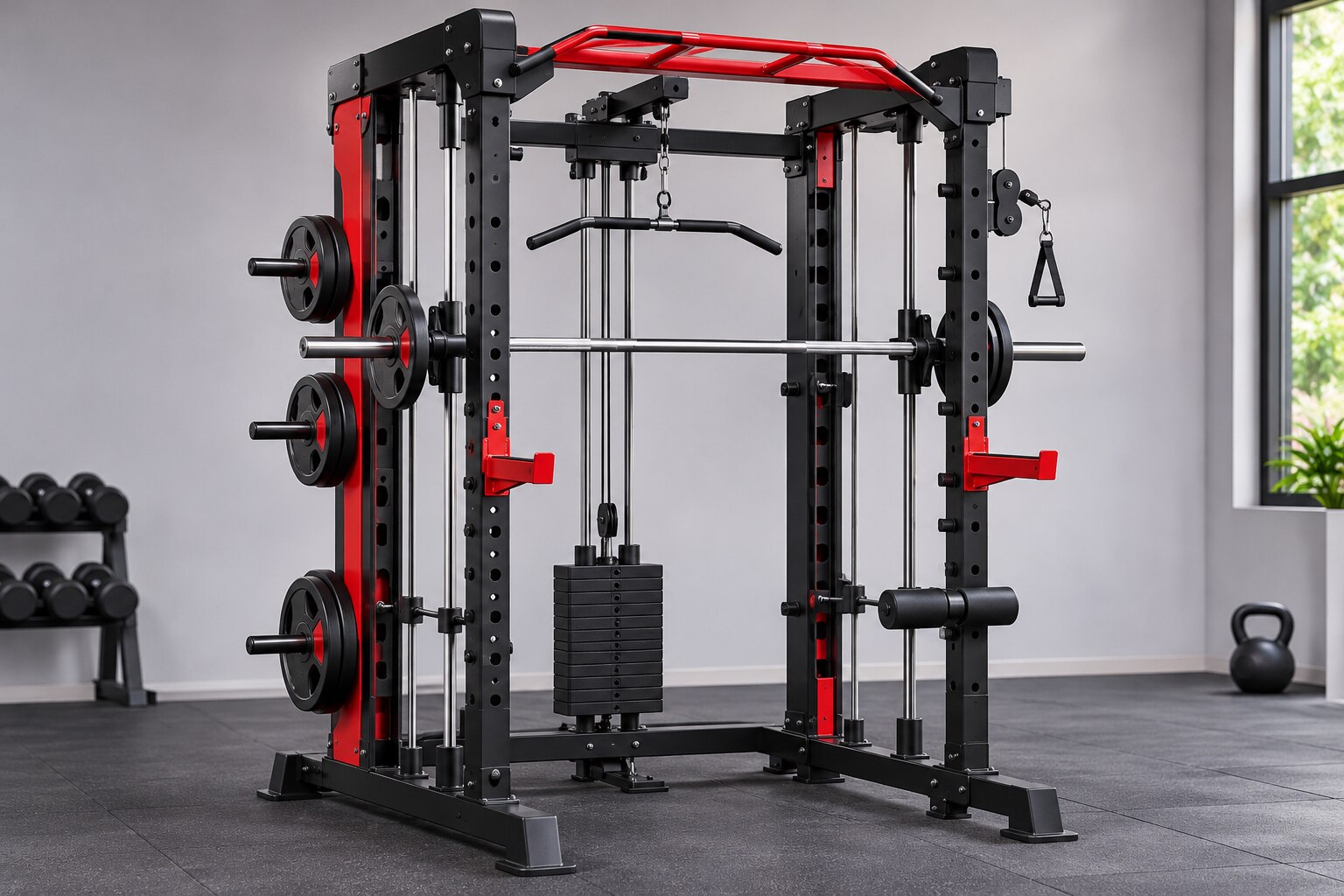
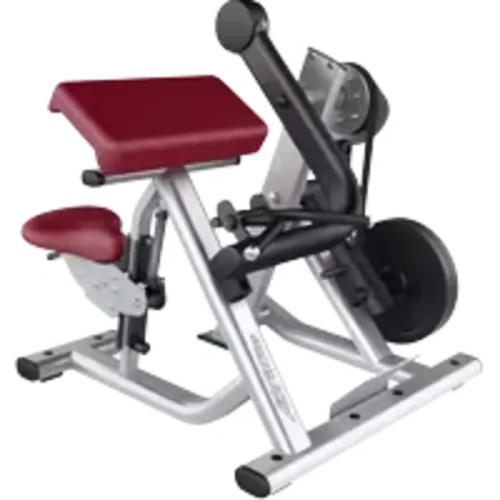
Measure each plate’s outside diameter and thickness. Larger plates alter deadlift height, squat setup and bench loading; thicker plates fill sleeves and storage pegs sooner. Audit every plate-loaded machine, including a flat bench ISO plate-loaded machine, for sleeve diameter, maximum plate thickness and stated load limit.
- Count plates and pairs, measure rack-peg length and spacing, and record unused sleeve length.
- Inspect rubber flooring, floor loading and doorway access; identify whether a lifting platform is available.
- Keep standard plates when compatible bars and machines already dominate, storage is narrow, or members mainly train lightly.
- Choose Olympic plates only when surrounding equipment shares the format.
That makes Olympic plates versus standard plates a systems decision. For a small gym in Nagpur, Olympic weight plates for a small gym in Nagpur are worth buying when regular squats, deadlifts, progressive loading or expansion justify compatible bars, collars, storage and flooring.
Build the right plate mix for users, lifts and storage space
Order enough matching pairs for every bar that may reach the planned top weight at the same time, then check that those plates physically fit the usable sleeve length.
Start with the heaviest lift, number of simultaneous users and available storage pegs—not a generic “full set.” Build around pairs of 1.25 kg, 2.5 kg, 5 kg, 10 kg, 15 kg, 20 kg and 25 kg plates so members retain small increments for progressive overload.
| Construction | Strength | Best fit |
|---|---|---|
| Cast iron or steel | Thin, compact heavy loading | Limited sleeves, pegs and budgets |
| Bumper | About 450 mm diameter and drop-tolerant | Controlled drops on suitable flooring |
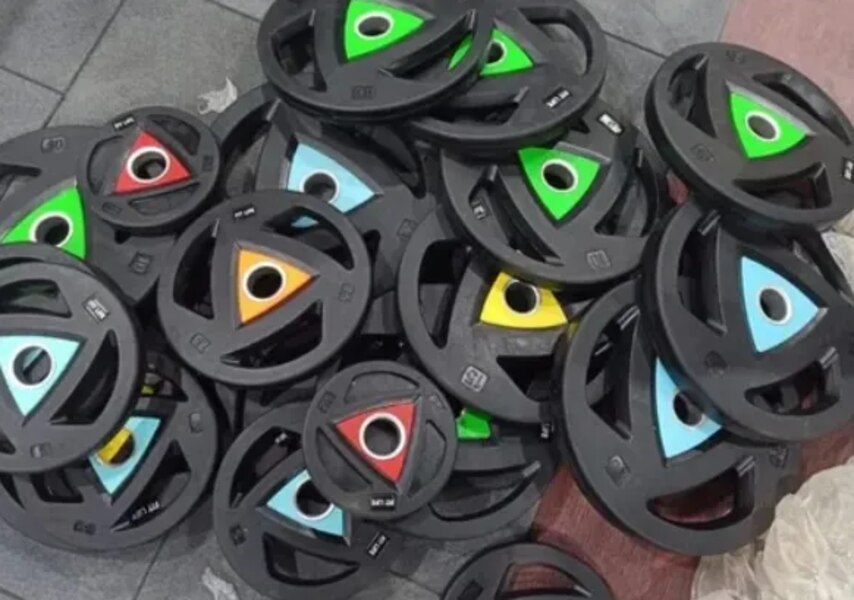
| Rubber-coated Olympic | Quieter handling and surface protection | Controlled barbell work, not repeated overhead drops |
| Urethane or calibrated steel | Lower odour, better surface resistance or tighter mass accuracy | Customer-facing durability or recorded programming |
A mixed inventory is usually more efficient than an all-bumper set. Thin iron or steel handles heavy loading, while bumpers cover lifts where dropping is part of the training policy; bumper thickness fills sleeves and racks faster. This is why bumpers are not automatically the best weight plates for small gyms.
Choose calibrated plates when small mass errors affect programming or records. Before delivery, add a load-rated rack with long enough pegs and clearance for removal. A rack that cannot hold the added thickness turns a good plate mix into a floor obstruction.
Control accuracy, handling and maintenance costs over the plate’s life
A set remains practical only if it survives member handling without undermining accurate loading. Weigh samples from every size and batch, record each measured mass, and pair plates with similar readings.
The advertised weight is not proof of calibrated accuracy: mismatched 20 kg plates create unequal bar loading and weaken progressive-overload plans, personal-training records and member confidence.
| Option | Handling advantage | Ongoing cost or risk |
|---|---|---|
| Cast iron | Thin, dense, high loading capacity | Rust protection; use rubber flooring and a no-drop policy |
| Rubber-coated | Quieter loading and surface protection | Odour, surface wear and direct-sun damage |
| Bumper | Suitable for controlled drops; consistent bar height | More sleeve and storage volume; inspect for swelling or separation |
| Urethane or calibrated steel | Cleaner finish or tighter mass control | Higher purchase cost; verify repair and replacement availability |
Inspect a sample for a solid hub, clean centre-hole fit, flat faces, rounded edges, legible markings and consistent thickness. Reject cracks, rubber separation, swelling, damaged hubs or holes that bind on the sleeve.
The best weight plates for small gyms balance purchase price with staff time, rack capacity and upkeep. In Nagpur, store plates under cover away from damp walls; control dust, heat, monsoon moisture and ventilation, and keep rubber or urethane out of direct sun.
A narrow rack, weak floor or absent platform can make a sound set impractical. That is the decisive answer to whether Olympic weight plates are worth it for a small gym in Nagpur.
Use a phased local buying plan before placing the order
Do not commit to a full set until the Olympic weight plates for small gym in Nagpur have passed a local, phased buying check.
1. Request one sample of every proposed material and size. Test each sample on the intended Olympic bar and every plate-loaded machine sleeve. A nominally compatible hole can still bind, rattle or exceed the sleeve’s usable length.
2. Get these details in writing: centre-hole diameter, outside diameter, thickness, stated weight tolerance, warranty terms and replacement availability. Keep measured weights from each sample so matching pairs can be selected.
3. Calculate the first order from the heaviest planned lift and the number of members training simultaneously. Buy matching pairs for that load, then add 1.25 kg and 2.5 kg pairs for progression instead of filling the budget with large plates.
4. Order a storage rack with the first substantial plate shipment if floor storage would narrow walkways. Add pairs as membership and barbell demand grow. Retain standard equipment when existing bars, machines and members do not justify conversion; use duplicate formats only for clearly different users.
5. Before accepting delivery, inspect cartons for crushed edges, check every plate for cracks or coating separation, and measure the route, doorway and installation area. Ask Singh Engineering Works whether it supports compatible storage, repair or installation across central India, and record who handles transport damage and future replacement claims.
Related products
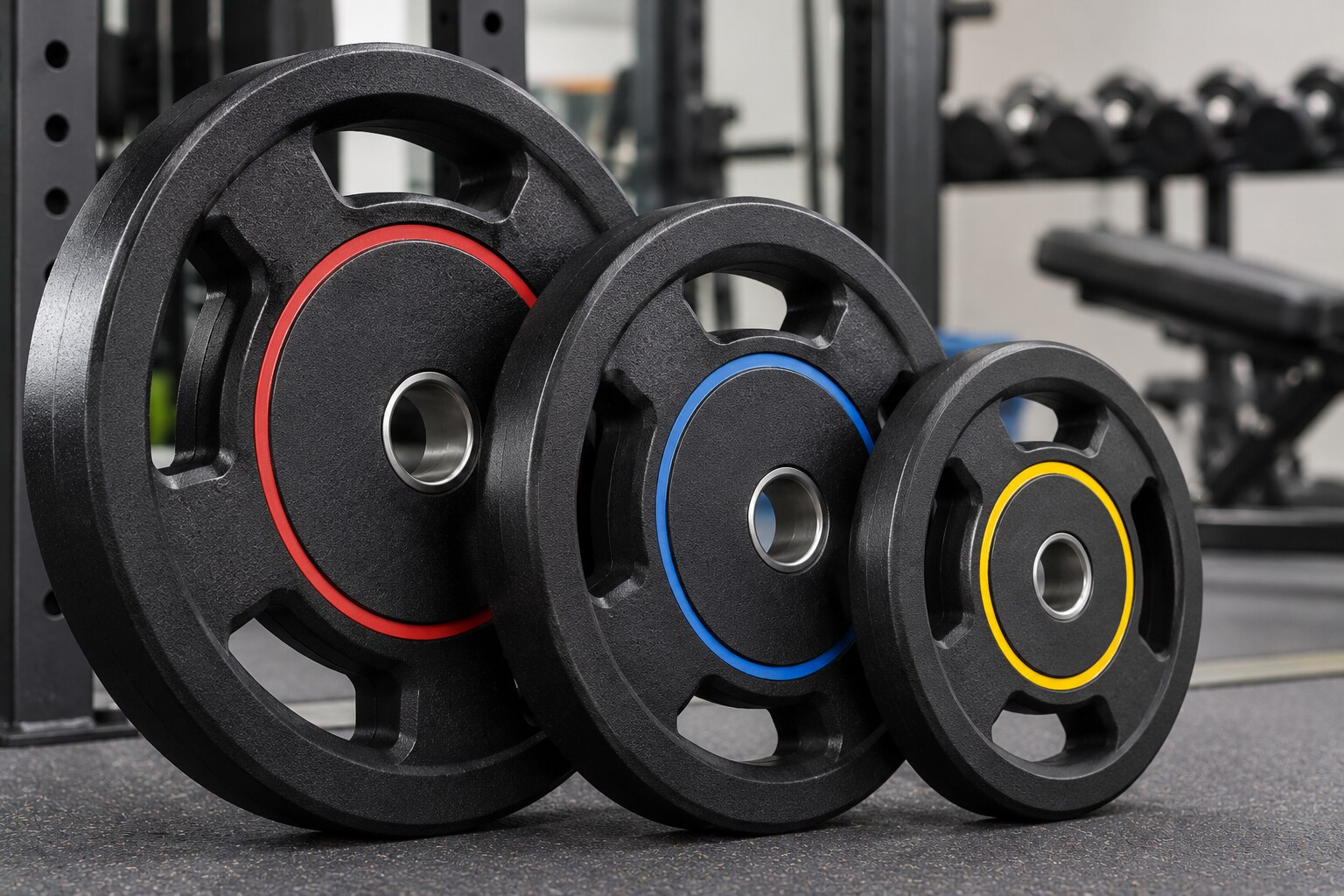
Olympic Weight Plate Olympic Weight Plates are essential for strength training, designed for durability and precision. View product → |
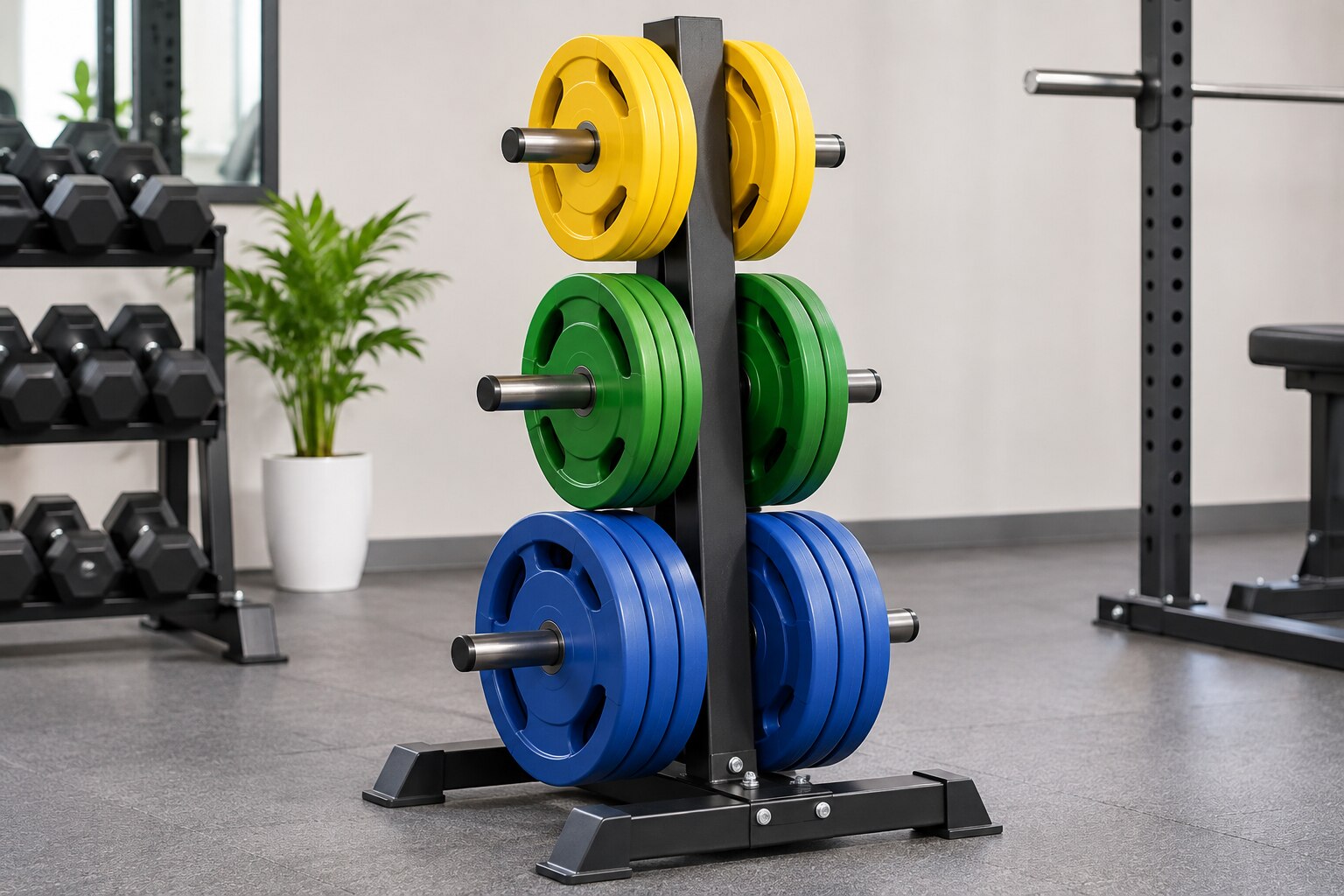
Gym Equipment Stand The Weight Plates Stand is a durable and efficient storage solution for your gym. View product → |
Frequently asked questions
Are Olympic weight plates worth buying for a small gym in Nagpur?
They are worth considering when members use deadlifts, squats, bench presses or progressive barbell training and you plan to expand the strength area. Include 50 mm bars, collars, racks, storage and future plate needs in the cost calculation.
What is the difference between Olympic plates and standard plates?
Olympic plates use a larger 50 mm centre hole and require Olympic bars and collars. Standard plates use a smaller centre hole and matching bars, so compare compatibility, loading capacity, equipment availability and storage before choosing.
How should a small gym choose its Olympic plate mix?
Match plate quantities and sizes to your members’ lifts, training levels and floor space. Include lighter change plates for progression, heavier plates for compound lifts and storage that keeps plates accessible without blocking walkways.
How can a gym control Olympic plate costs after buying them?
Check plate accuracy, inspect hubs and edges, use suitable storage, avoid dropping iron plates and schedule inspections. Ask suppliers about replacement parts, repairs, delivery and phased purchasing before placing the order.
Related products
Rubber Gym Weight Plates Rubber gym weight plates are durable, non-slip, and noise-reducing, ideal for both home and commercial use. View product → |
Plate Rack A weight plate rack is a sturdy piece of gym equipment for weight plate storage between your strength training sessions. View product → |
Keywords