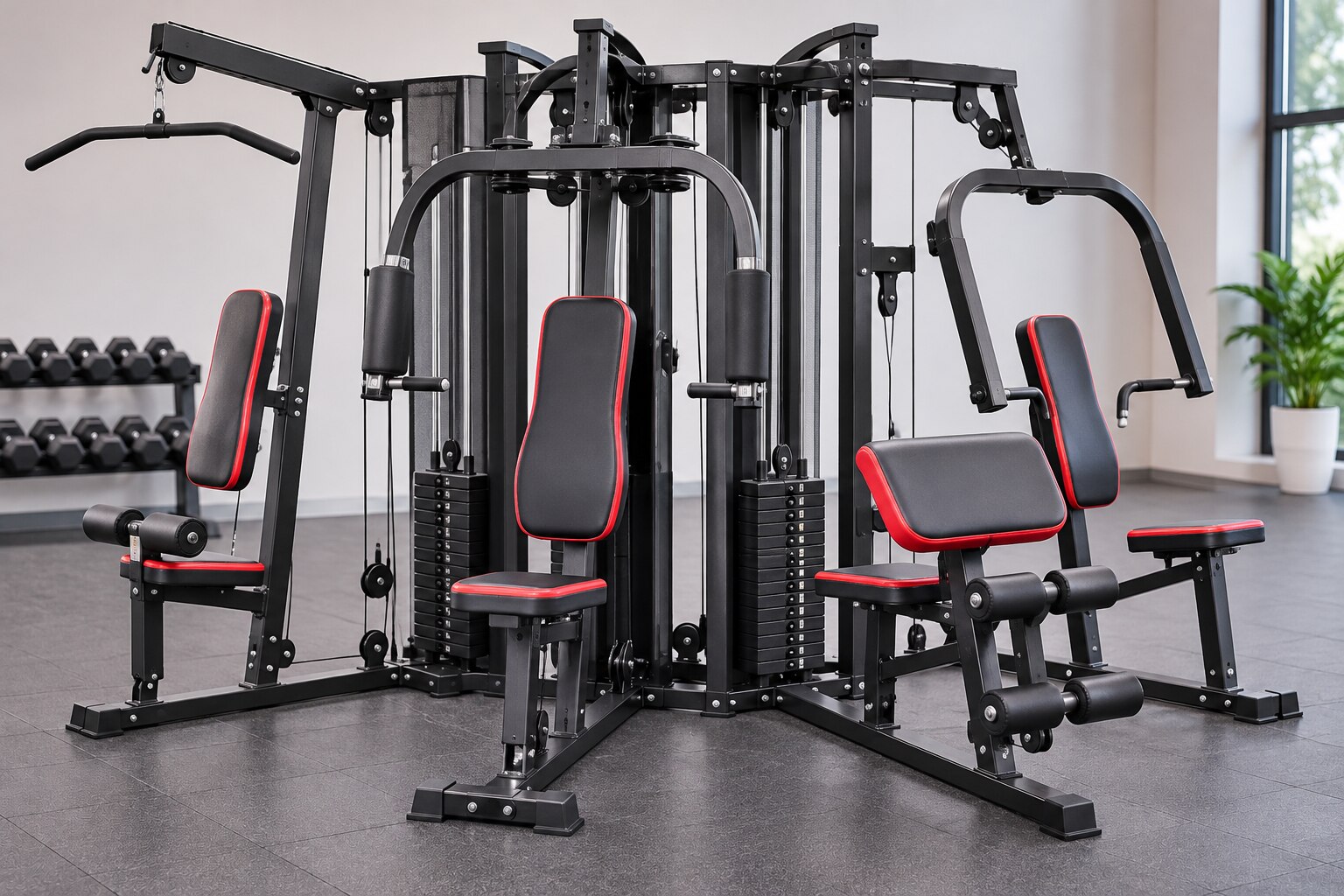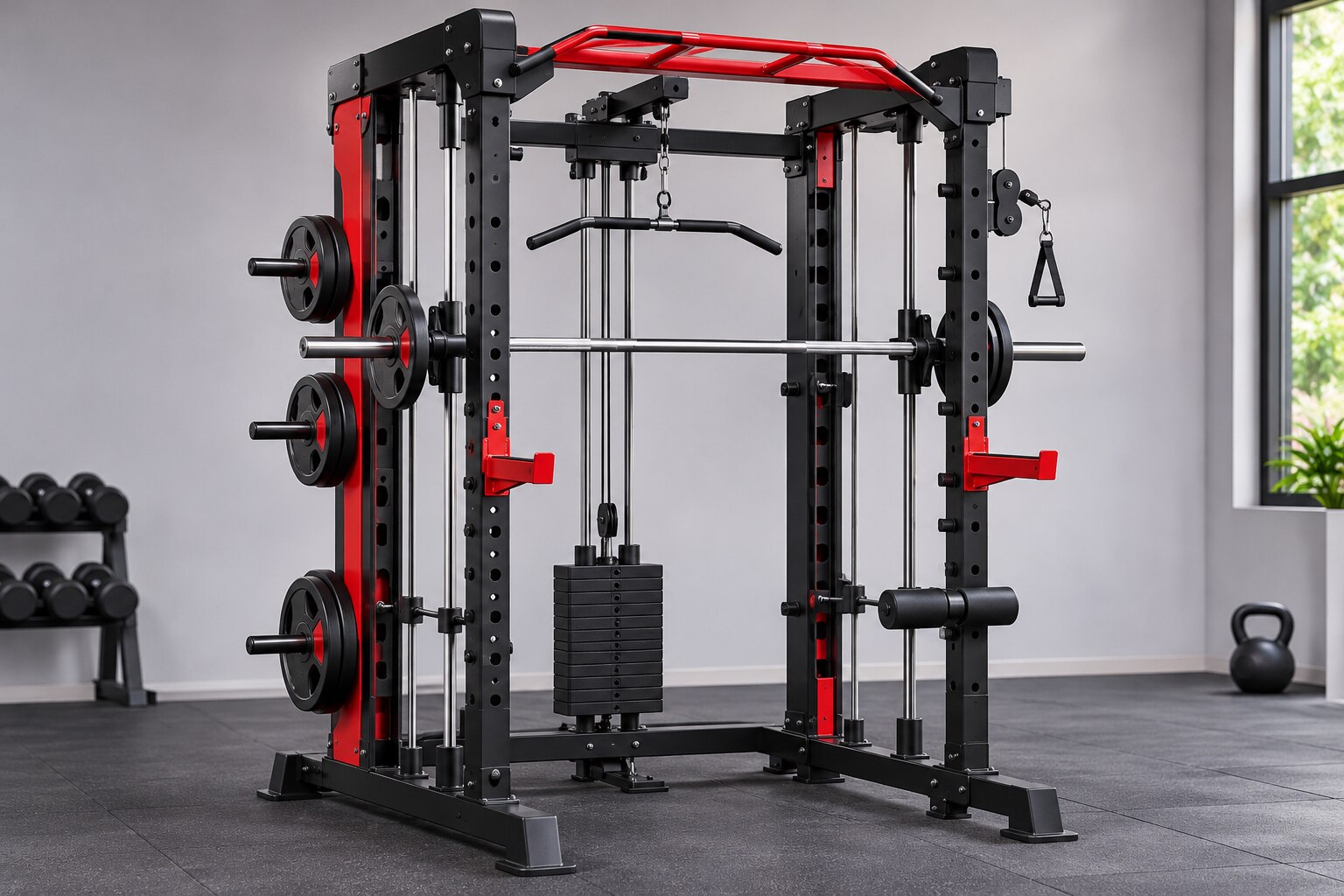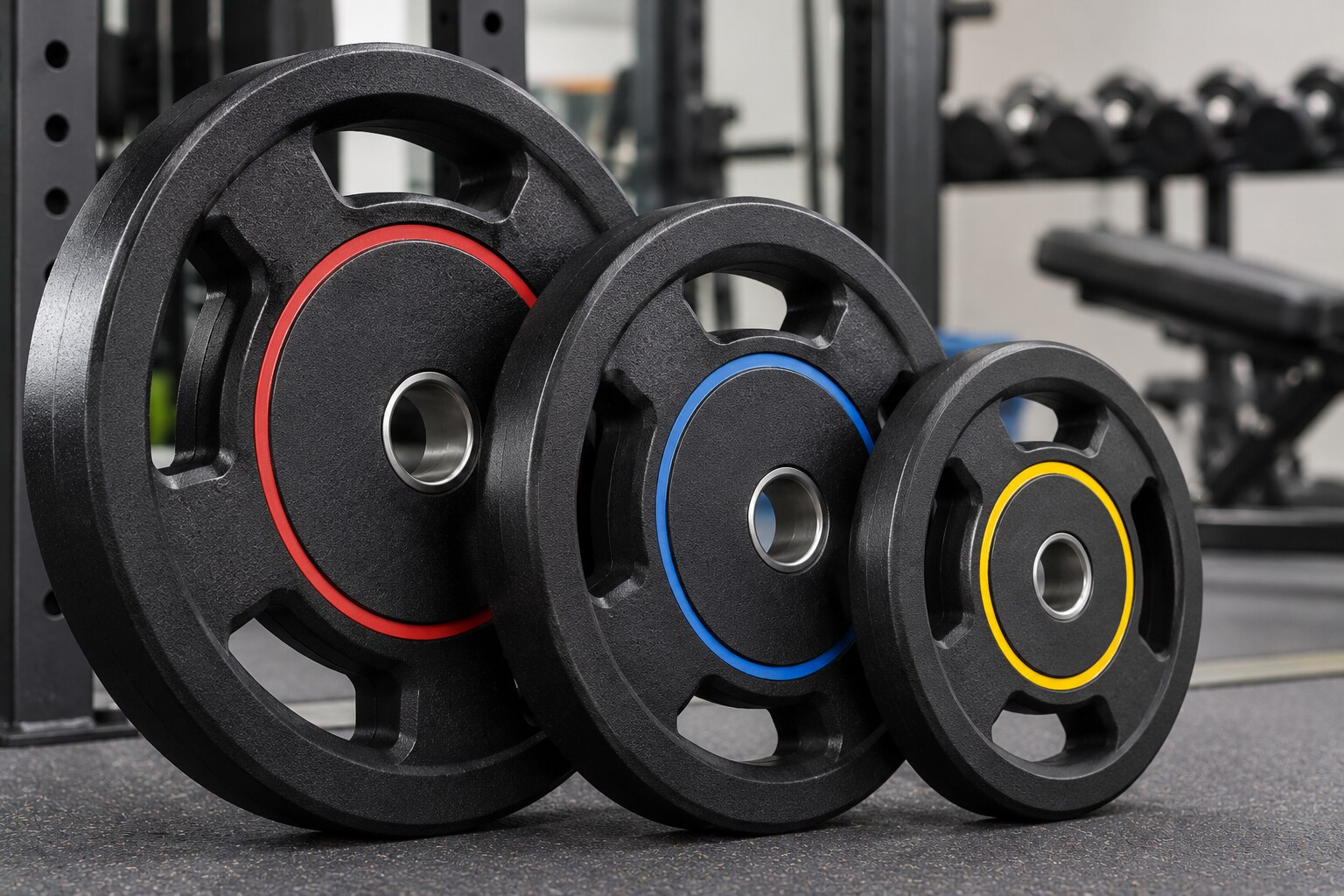
The right storage choice depends on more than how many plates you own. Compare the layout, measurements, plate-bore compatibility, loaded stability, access and installation requirements before deciding which design fits your home gym.
Key takeaways
- Confirm whether the vertical rack is freestanding or wall-mounted.
- Measure floor height, width and clearance before comparing storage designs.
- Check peg length and diameter against every plate you own.
- Test stability with the heaviest plate removed first.
What is the difference between a plate stand and a vertical plate rack?
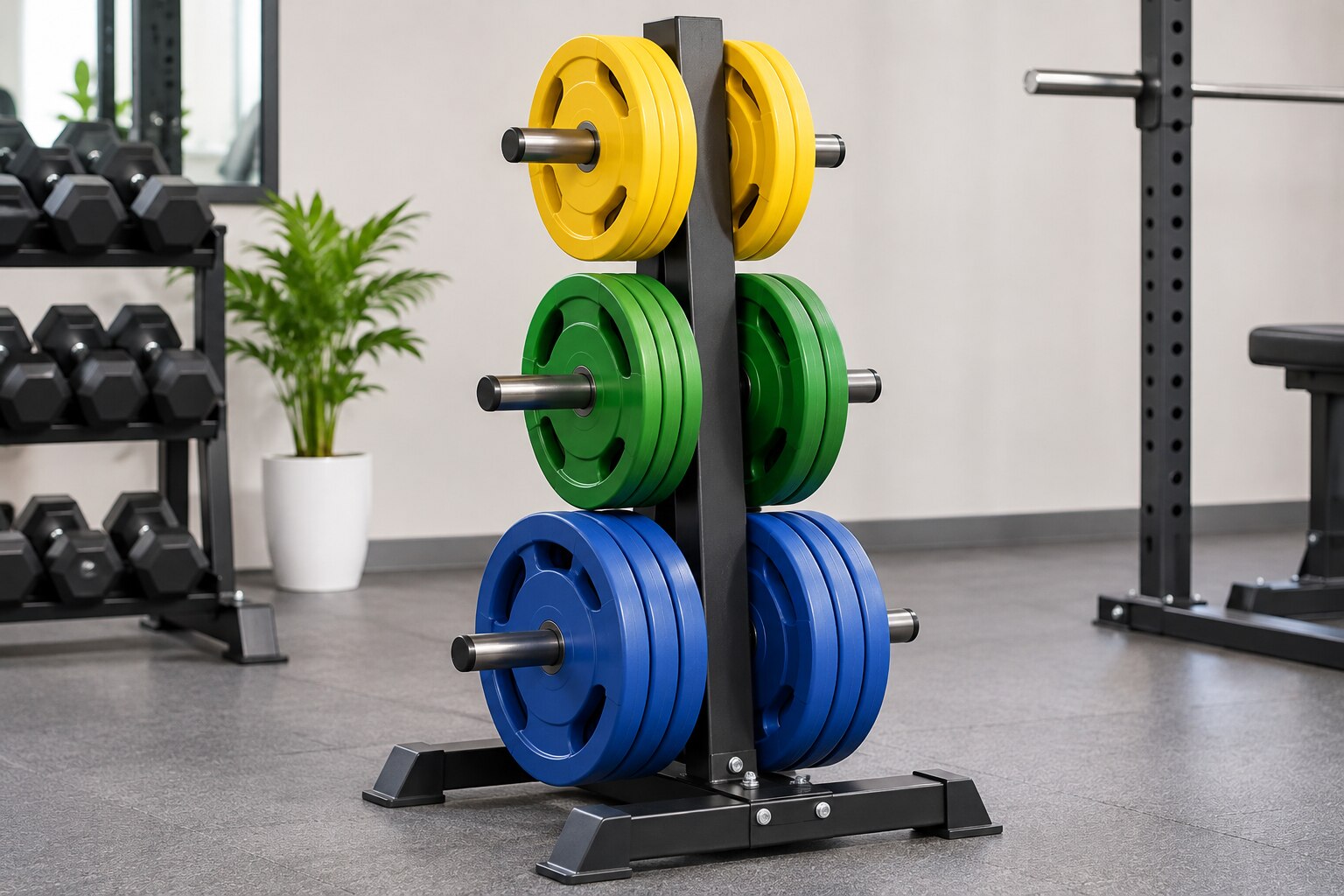
A plate stand is usually a freestanding plate tree or low A-frame; a vertical plate rack stores plates in a taller, narrower line. Do not treat the terms as interchangeable: “vertical rack” can mean a freestanding upright or a wall-mounted holder, so confirm the quoted design, mounting method and number of pegs.
| Option | Plate-post layout | Footprint and access | Main trade-off |
|---|---|---|---|
| Plate tree | Several angled or horizontal pegs around a central frame | Wider footprint; plates are reachable from different sides | A low A-frame reduces lifting height and resists tipping during one-handed removal |
| Vertical freestanding rack | Posts stack plates in a tall arrangement | Uses less floor width; access is usually from one side | Greater lifting height and a higher centre of gravity |
| Wall-mounted vertical rack | Pegs project from a wall plate or rail | Minimal floor use; access depends on wall clearance | The wall and fasteners carry the complete rack-and-plate load |
Choose a tree when you need quick access around a home gym and have floor width. Choose a vertical weight plate holder in Nagpur when floor space is tight and the ceiling, base stability and delivery route work.
For a weight plate stand versus vertical rack in Nagpur, check whether storage must sit beside a power rack or barbell station; leave enough clearance to remove the largest plate without striking the bar, wall or user.
Measure the space before comparing storage designs
A reliable fit check for home gym plate storage in Nagpur measures the working space, not just the rack’s frame footprint. Use the same method before comparing a weight plate stand or vertical plate rack for home gym in Nagpur.
1. Record the rack’s assembled width, depth and height. Add the diameter of your largest plate and enough side clearance for a hand to grip and remove it. A 450 mm bumper plate needs more surrounding room than a thin iron plate.
2. Mark the distance from the rack to the barbell loading area, power rack, wall, doorway and walking route. Check ceiling height for a tall vertical rack, then measure the lift, door width and every stair turn. Ask for packed dimensions, shipping weight and assembly requirements if delivery is involved.
3. Measure every plate type: outside diameter, thickness and centre-hole diameter. Include collars, sleeves and any frame obstruction in your clearance check.
4. On tile or concrete, confirm that every foot sits flat. Check whether a rubber mat can spread concentrated point loads and reduce sliding. A mat protects the floor; it does not make an unstable rack stable.
5. Cut cardboard to the rack’s assembled footprint, add the plate and hand-clearance zones, and tape the outline to the floor. Walk around it, load a plate from each side and simulate barbell loading before ordering. A doorway or walking conflict found on cardboard costs nothing to fix.
Check peg compatibility, usable length and mixed plate storage
A holder fits only when its peg matches the plate bore and leaves enough usable length for your actual stack. Standard Olympic plates have an approximately 50–51 mm centre hole, while many non-Olympic plates use a much smaller bore.
Ask for peg diameter, usable insertion length and end clearance; “Olympic compatible” is not a complete specification.
| Plate type | What to check | What can go wrong |
|---|---|---|
| Thin cast iron | Compare total stack thickness with usable peg length | A long-looking peg can still lose capacity to collars, end caps, weld beads or an oversized diameter |
| Rubber-coated plates | Allow extra thickness around the bore | Fewer plates fit than the quoted count |
| Bumper plates | Check the largest diameter, thickness and neighbouring-peg clearance | A bumper can block smaller plates or force you to lift around the frame |
For a vertical weight plate holder in Nagpur, ask for these measurements in writing:
- Peg diameter, usable insertion length after every collar or cap, and clearance from the frame.
- Maximum load per peg, total load, and the plate thickness assumed for that rating.
- Space between pegs, tested with your largest bumper plate, so adjacent stacks do not scrape or block removal.
- Separate pegs for different plate types; they reduce scraping and awkward lifting.
Stack heaviest to lightest only when the peg and base are designed for that pattern. Otherwise, keep the heaviest plates low and near the frame’s centre. That rule matters for a plate stand for home gym buyers in Nagpur, where mixed collections can make a narrow rack unstable.
Test capacity and stability with the heaviest plate removed first
Test stability during normal use by removing the heaviest plate first from an outer peg with one hand. Compare the maximum total load, maximum load per peg and manufacturer’s assumed plate type; “heavy-duty” proves nothing without kilogram limits. Cast-iron, rubber-coated and bumper plates occupy different peg lengths and distribute weight differently.
| Option | Stability and space trade-off | Check before buying |
|---|---|---|
| Narrow, tall tree | Saves floor width but raises the loaded centre of gravity | Base width, frame height and upper-peg limits |
| Broad A-frame or low rack | Resists tipping better but uses more floor area | Peg spacing, total load and access clearance |
| Wall-mounted vertical rack | Frees floor space but transfers load to the wall | Reinforced concrete, solid brick, hollow block or partition board; then use the correct anchor and fastener |
For a weight plate stand versus vertical rack in Nagpur, load every peg within its limit and distribute plates instead of filling one side. Ask whether a freestanding model needs floor anchoring. A level floor is essential; rubber feet reduce sliding and protect flooring but cannot correct an undersized base or uneven surface.
Inspect these points before installation:
- Remove the outer heaviest plate and check for lifting, rocking or foot movement.
- Confirm peg spacing, usable length and the loaded centre of gravity.
- Examine weld quality, continuous powder-coat coverage and capped tube ends.
- Check that non-slip feet contact the floor evenly.
- For home gym plate storage in Nagpur, reject any quotation that omits total capacity, per-peg capacity or assumed plate type.
Choose the design that matches your training layout and local support
For a weight plate stand or vertical plate rack for home gym in Nagpur, choose by training layout, not plate count alone. A plate stand for home gym buyers in Nagpur should also be compared by delivery, assembly, mounting hardware, replacement parts and repair access.
| Option | Best choice when | Main trade-off |
|---|---|---|
| Freestanding plate tree | You need access from several sides, have a modest mixed collection and enough floor width | Wider footprint |
| Low horizontal or A-frame rack | Plates are heavy, removed frequently, or tipping resistance matters most | More floor frontage |
| Vertical freestanding rack | Floor width is limited and the ceiling, doorway access and base stability are suitable | Greater lifting height and a higher centre of gravity |
| Wall-mounted rack | The wall structure, anchors, installation position and combined load are verified | The wall and fasteners carry the entire load |
Place storage close to a power rack to shorten carrying distance, but leave enough clearance to stop a plate striking the rack, barbell or user. Test removal with the largest plate and your normal stance when no clearance is published.
Ask Singh Engineering Works for:
- Assembled and packed dimensions, shipping weight and assembly requirements
- Peg diameter, usable peg length, end clearance, per-peg limit and total load limit
- Replacement peg and foot availability, floor or wall hardware, and repair arrangements
A local manufacturer and gym-machine repair provider becomes useful when installation, damaged pegs, worn feet or future collection changes affect the total installed cost.
Frequently asked questions
What is the difference between a plate stand and a vertical plate rack?
A plate stand is usually a freestanding plate tree or low A-frame. A vertical plate rack stores plates in a taller, narrower line. Confirm whether the quoted vertical rack is freestanding or wall-mounted, plus its mounting method and peg count.
What should you measure before buying home gym plate storage?
Measure the available floor width, depth and ceiling height, then allow clearance for loading and removing plates. Include space around the rack so plates do not obstruct your barbell path or walking route.
How do I check whether pegs will fit my weight plates?
Compare each peg’s diameter and usable length with the centre-hole diameter and plate thickness of your plates. Check mixed storage separately because bumper plates, cast-iron plates and Olympic plates need different clearance.
How should I test plate-rack capacity and stability?
Check the stated load and count the plates you plan to store. Load the rack with the heaviest plate removed first, then test whether the frame tips, shifts or flexes as you unload plates.
Keywords