A plate stand can be a profitable resale or project-supply item, but only when its capacity, stability, compatibility, packaging and service requirements are clear. By the end, you will be able to match each stand format to a distributor business model, compare it with alternative storage, and build an RFQ that exposes unsafe or uneconomic specifications.
Key takeaways
- Match the stand format to resale, fit-out, project, or online-order requirements.
- Measure plate diameter, hole size, sleeve length, footprint, and packed dimensions.
- Demand load ratings, weld details, finish specifications, warranty terms, and spare-part support.
- Use a written inspection and replacement process before accepting wholesale stock.
Which distributor business models benefit from plate stands?
Wholesale resale, gym fit-outs, project supply, online sales and bundled equipment orders can all benefit from plate stands, but each model needs a different sales case.
| Business model | Why a plate stand fits | Main commercial test |
|---|---|---|
| Wholesale resale | A compact, comparable item is easy to quote across multiple gyms. | Confirm landed freight, assembly time and service cost. |
| Gym fit-outs and project supply | The stand completes an organised storage plan alongside training equipment. | Check floor area, loading access and circulation routes. |
| Online sales | Clear dimensions and packed details reduce returns caused by poor fit or freight surprises. | Publish assembled size, package size, weight and assembly requirements. |
| Bundled equipment orders | Storage adds value to a wider equipment package and simplifies one-site delivery. | Match the stand with the planned racks, lockers and machine layout. |
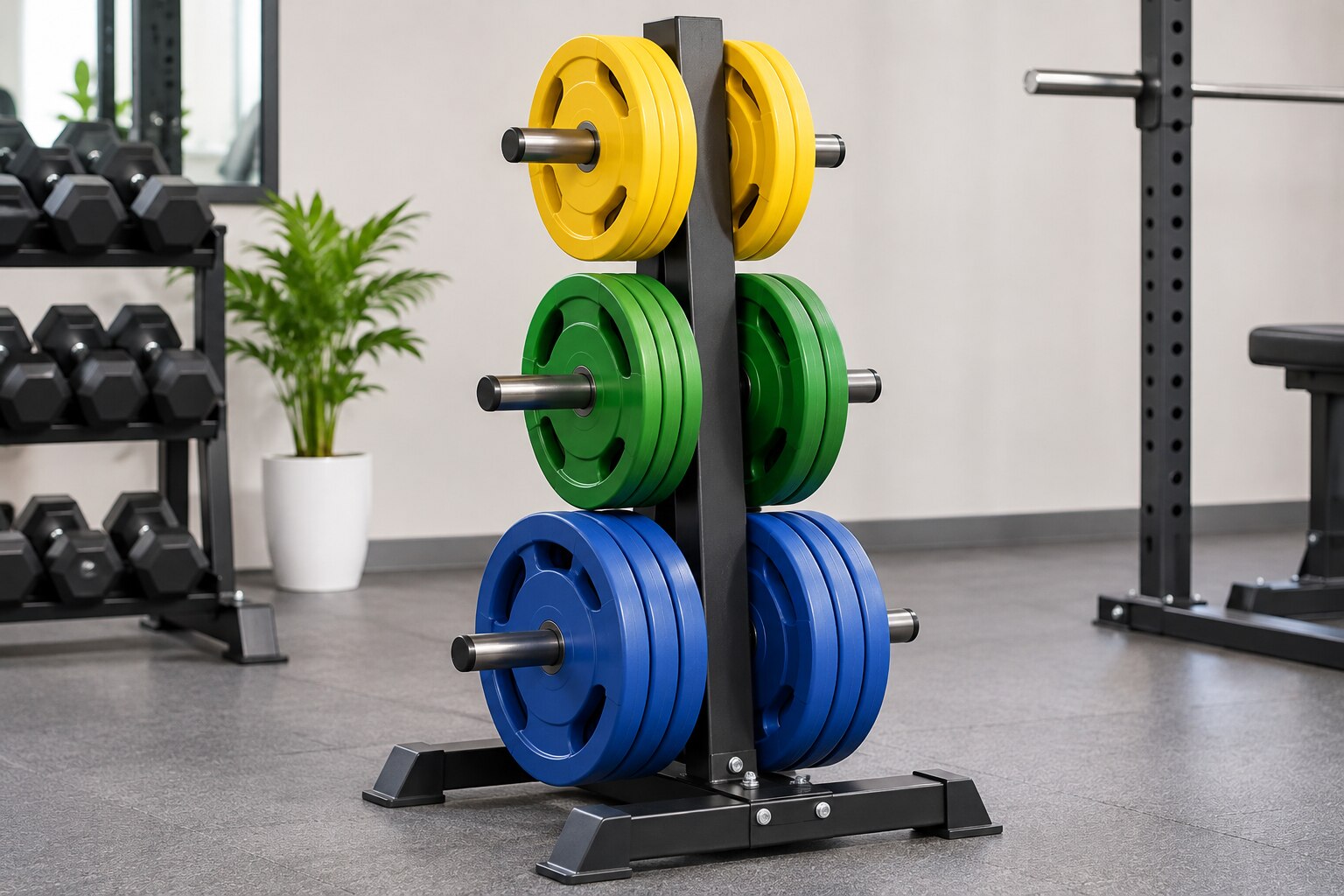
A weight plate stand for dealers is easier to sell when the quotation states the declared working load per peg and for the complete frame, compatible plate type, dimensions, packaging details, warranty terms and replacement parts.
Without those details, two apparently similar products cannot be compared, and a low unit price can disappear into freight, assembly or warranty visits.
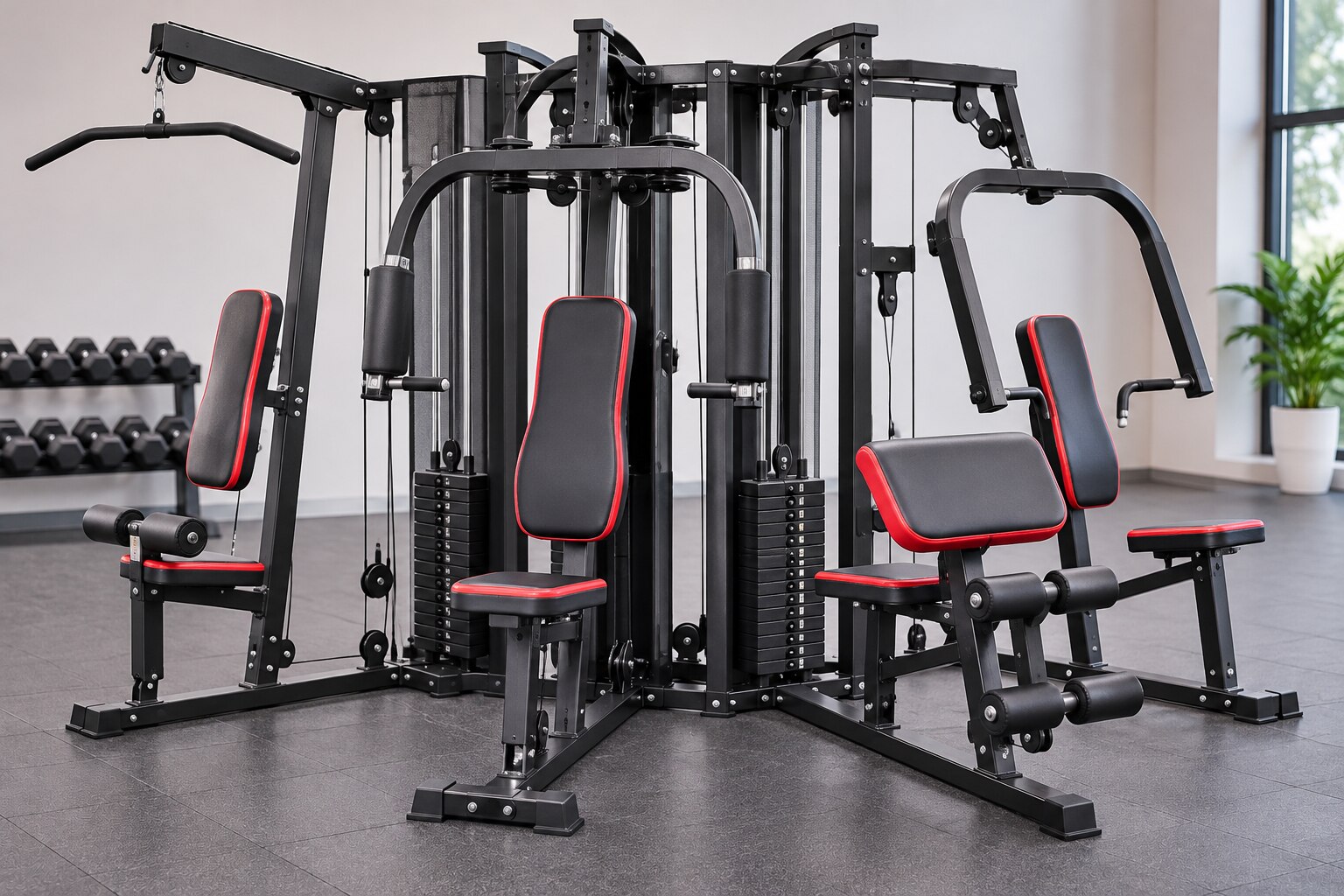
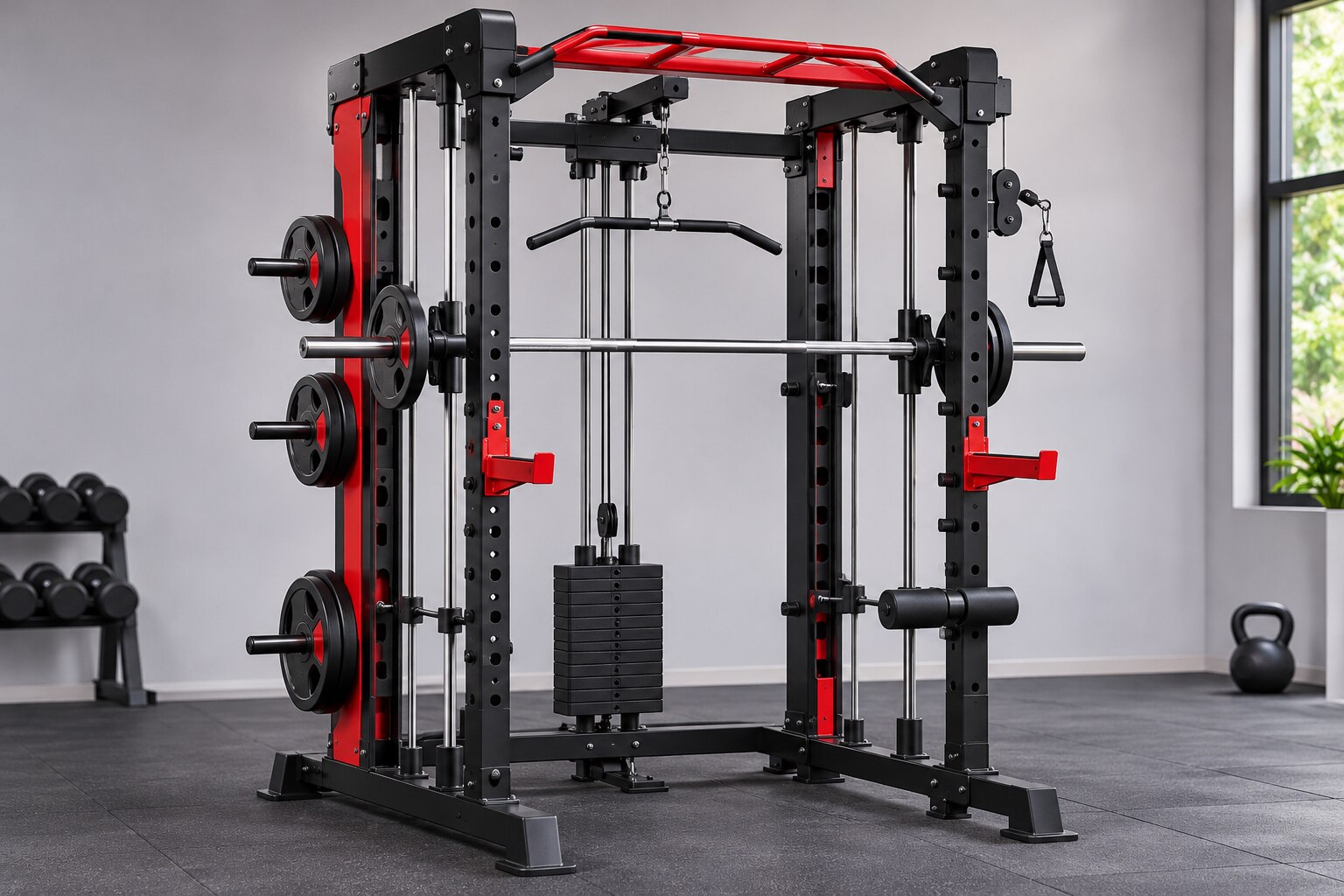
Treat standalone resale differently from a complete gym-storage package. A single plate stand needs a clear product specification; gym storage products for distributors must coordinate plate racks, dumbbell racks, bar holders and lockers within the same floor plan and circulation routes.
Choose the product when specifications are easy to compare, freight and assembly costs are predictable, and inspection, replacement-part and warranty obligations are manageable.
Which plate-stand format and storage alternative fits the site?
Choose the format that matches plate thickness, user reach, available circulation space and installation conditions—not simply the smallest footprint.
| Option | Best fit | Main consequence |
|---|---|---|
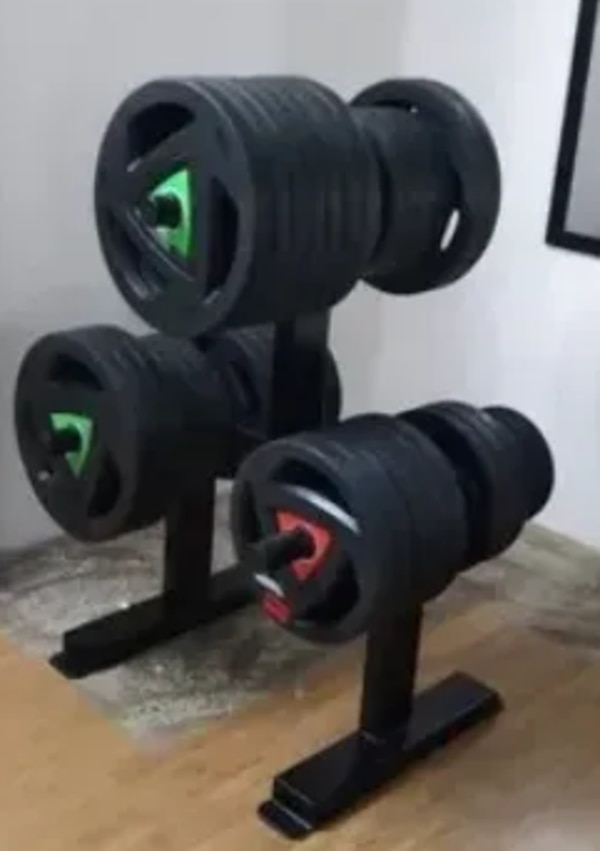
| Vertical plate tree | Mixed plate sizes in a tight floor area | High posts can force heavy plates above waist level, and uneven unloading can destabilise the stand |
| Horizontal plate rack | Thick bumper or rubber-coated plates | Lower lifting height and easier loading, but greater floor length |
| A-frame rack | Open, visible, accessible storage | Easy plate selection, with a wider footprint and exposed stock |
| Wall-mounted rack | Clear floor space and controlled access | Requires suitable masonry or structural fixing; poor anchors create a safety failure |
| Plate-storage attachment | A plate-loaded machine with a rated storage point | Keeps plates beside the machine, but only within the attachment’s stated load |
| Floor storage or pallets | Temporary stock, low-turnover areas or inbound handling | Cheap and flexible, but obstructs circulation, collects dirt and offers weak security |
| Shelving | Segregated inventory or back-room storage | Improves organisation, but needs rated shelves and more installation |
| Machine storage | Plates dedicated to one station | Reduces carrying distance, but leaves less flexibility when equipment is rearranged |
A floor plan must reserve clearance around plate stands, dumbbell racks, bar holders and lockers. A compact tree is a poor commercial choice if users collide with adjacent equipment or repeatedly lift plates too high.
Use pallets for transport, not routine member access. Shelving suits controlled storage; a rated machine attachment suits dedicated use. Check anchoring, cleaning access, damage exposure and theft control before choosing the apparent space-saver.
What measurements prove that a stand will fit the plates and the order?
Measure the plates and the shipment space before comparing quotations. A stand fits an order only when its plate interface, physical envelope, rated capacity and packaging match the stock you intend to sell.
1. Record the footprint, overall height and base clearance. Ask for both packed dimensions, which determine freight and storage space, and assembled dimensions, which determine delivery access and floor layout.
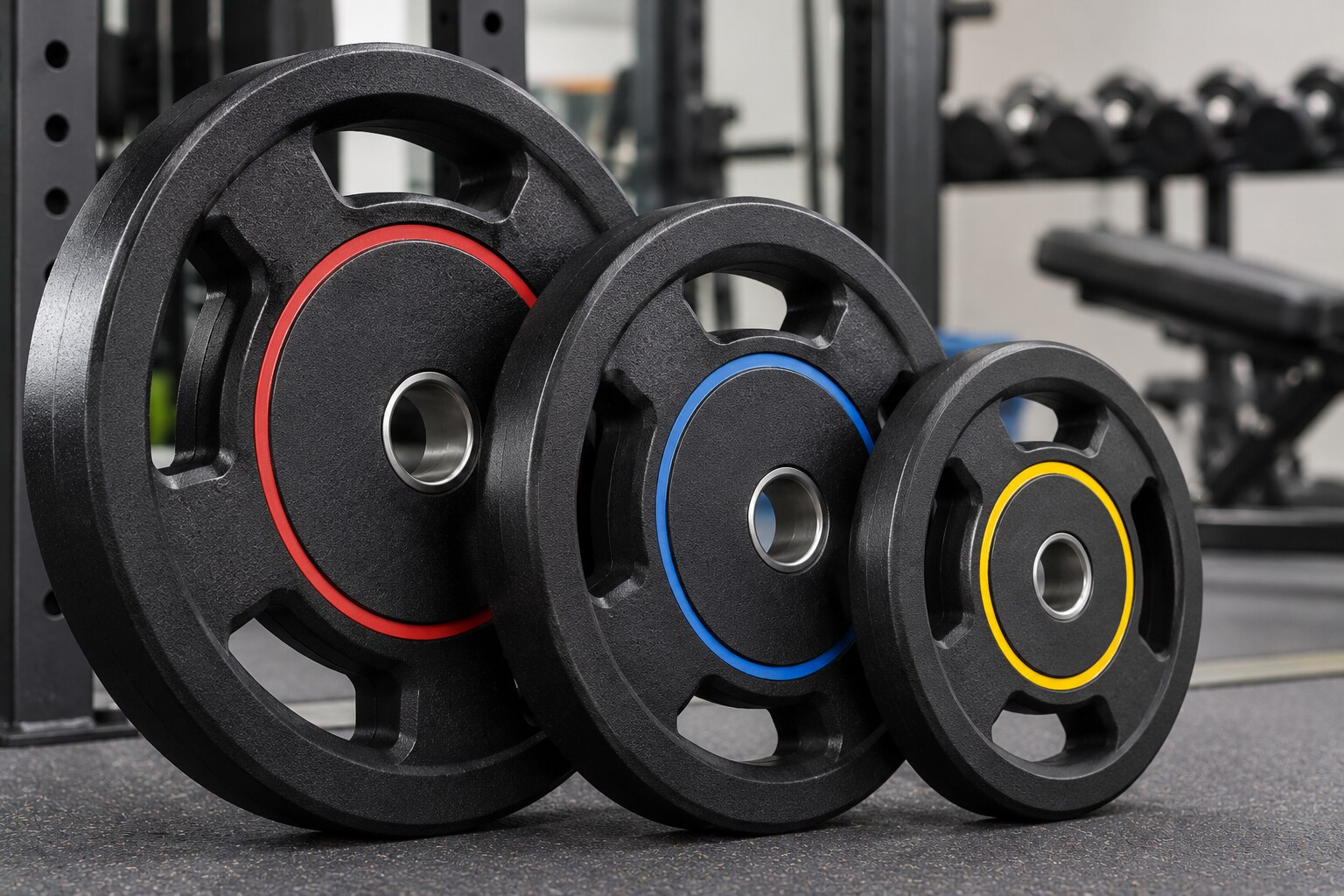
2. Measure the plate centre hole, then match it to the peg. Olympic plates normally have an approximately 50 mm hole and need an Olympic storage post. Standard or “one-inch” plates use an approximately 25–28 mm hole and need a smaller peg.
A weight plate stand supplier in Nagpur should state the plate standard rather than describe compatibility vaguely.
3. Measure plate diameter, stack thickness, usable post length, spacing between posts and end-stop clearance. Nominal peg diameter alone proves little: thick bumper or rubber-coated plates need more length and clearance than thin cast-iron plates, even at the same weight.
Calculate capacity from plate diameter, total plate weight, number of posts, the stated load rating per peg and the stated rating for the complete frame. A four-peg stand holding ten 20 kg plates per peg carries 800 kg before the frame.
Four pegs therefore do not mean a 4-load capacity; request the working limit for each peg and the whole stand.
How do you verify stability, durability and service risk?
A stand is not proven safe by its evenly distributed static capacity. Require evidence that it remains stable when users remove plates from one side, pull them off at an angle, or drop them onto a peg.
Request:
- Footprint and centre-of-gravity assumption
- Maximum load per peg and complete-frame load
- Working-load basis: calculation, test report or manufacturer estimate
- Freestanding or anchored installation status
- Anchoring recommendation, including floor type
- Inspection interval and replacement-part list
| Check | What to examine | Failure exposed |
|---|---|---|
| Freestanding stability | Uneven unloading, tall upper loads and sliding | Tipping or floor movement |
| Anchored stability | Anchor type, fixing points and substrate | False capacity on unsuitable floors |
| Handling loads | Peg bending from angled pulls or dropped plates | Damage hidden by static calculations |
| Floor contact | Rubber feet, protection pads and level base | Sliding, floor damage or base distortion |
Inspect weld continuity, bent or cracked pegs, loose fasteners, distorted bases, damaged sleeves and overload marks. A failed weld is obvious; a bent peg or stretched fastener can become dangerous after repeated loading.
Powder coating wears first at peg ends and contact points. Exposed steel then corrodes quickly in humid, poorly ventilated or frequently cleaned gyms, so end caps, peg sleeves and touch-up provisions affect service cost.
Do not treat a reference to a stationary training-equipment standard as proof that a passive rack passed tipping, impact or peg-bending tests. A distributor needs those specific test results or a clearly documented engineering basis.
What should a Nagpur distributor demand before placing an order?
Demand a quotation that makes compatibility, capacity and after-sales work measurable. For weight plate stands for gym equipment distributors in Nagpur, require the RFQ to state:
- Olympic or standard plates, peg count, intended load per peg and maximum frame load
- Plate thickness and diameter, footprint, height, finish, anti-tip features and anchoring requirements
- Welded or knock-down assembly state, packed dimensions, spare hardware and replacement sleeves
- Warranty exclusions for overloading, plus inspection guidance covering welds, pegs, fasteners, base distortion, sleeves and overload damage
| Format | Commercial advantage | Risk to price or service |
|---|---|---|
| Welded stand | Less field assembly and fewer fastener errors | Larger packed volume and greater transit-damage exposure |
| Knock-down stand | Lower cubic freight volume | Assembly labour, missing hardware and field-loosening claims |
For plate stand wholesale in Nagpur, compare landed cost, not factory or ex-works price. Add packing volume, freight, unloading, assembly labour, replacement parts, warranty returns and local service visits; a cheaper unit can cost more after repeated repairs.
Ask for the declared inspection interval and replacement-part lead time before approving a supplier. Singh Engineering Works can help a distributor discuss custom dimensions, gym storage products, equipment supply or repair support, but acceptance should depend on documented load ratings, stability, plate compatibility and service specifications.
Related products
Gym Equipment Stand The Weight Plates Stand is a durable and efficient storage solution for your gym. View product → |
Plate Rack A weight plate rack is a sturdy piece of gym equipment for weight plate storage between your strength training sessions. View product → |
Frequently asked questions
Which distributor business models benefit from weight plate stands?
Wholesale resellers, gym fit-out contractors, project suppliers, online sellers, and bundled-equipment dealers benefit when the stand solves a clear storage need and fits their delivery model.
Which plate-stand format and storage alternative fits the site?
Choose a vertical stand for compact floorspace, a horizontal rack for accessible plate loading, or a wall-mounted rack when the wall can safely carry the load. Compare these with plate trees, weight-storage racks, and integrated power-rack storage.
What measurements prove that a stand will fit the plates and the order?
Check plate diameter, centre-hole diameter, sleeve diameter and length, total loaded height, base footprint, packed size, shipping weight, and the number of plates required per stand.
How do you verify stability, durability and service risk?
Request the rated load, base dimensions, steel thickness, weld and joint details, coating process, corrosion protection, test method, warranty exclusions, spare-part availability, and replacement procedure.
What should a Nagpur distributor demand before placing an order?
Ask the weight plate stand supplier in Nagpur for a written quotation, drawings with dimensions, material and finish specifications, load rating, packaging details, delivery terms, tax invoice, warranty, inspection rights, and after-sales contact.
Keywords