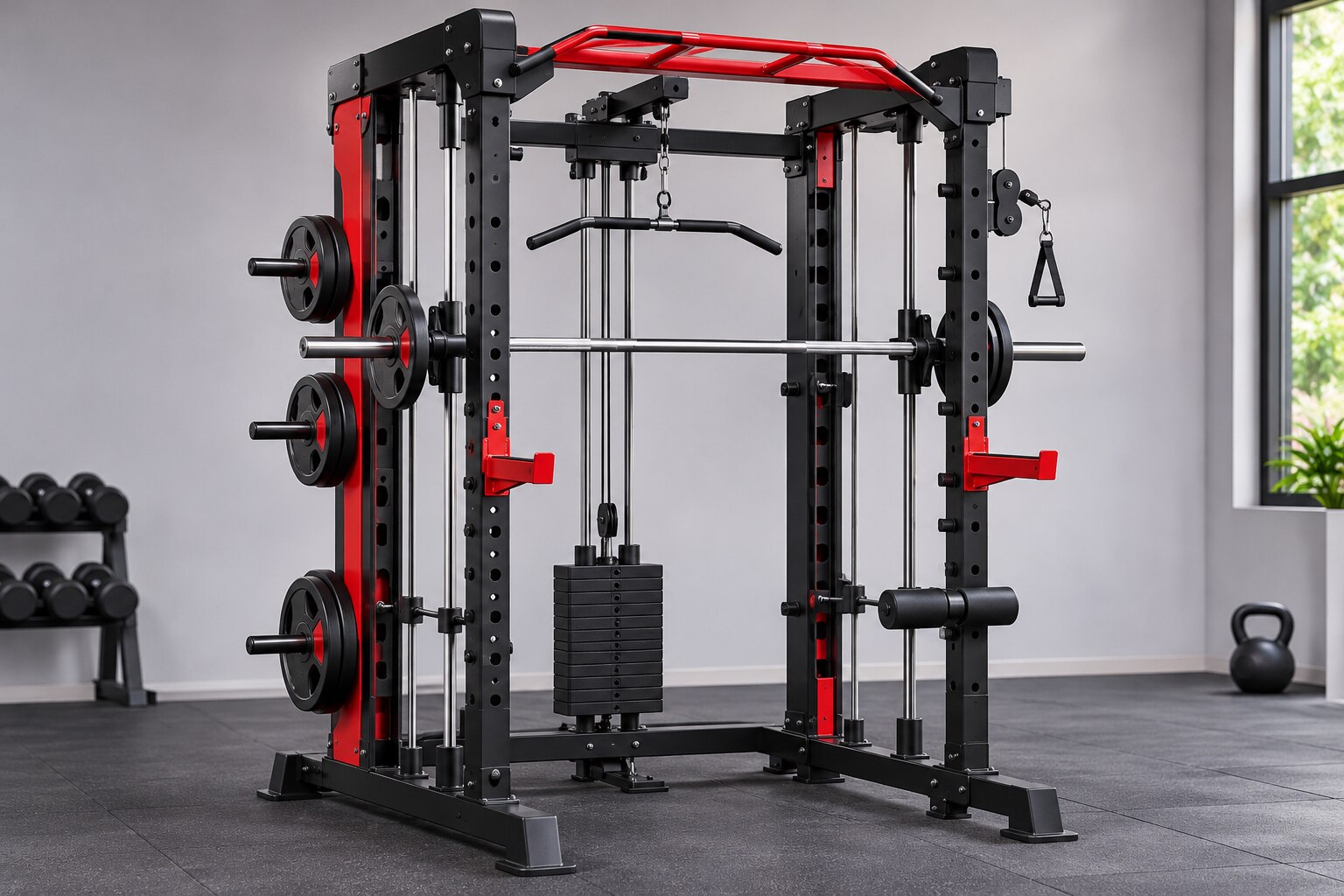
A five-station machine can lose availability because of one frayed cable, seized pulley, bent guide rod, loose structural joint or damaged pad. By the end, you will be able to isolate faults safely, compare an adjustment with a technician visit or replacement, prepare a useful Nagpur service request, and set up maintenance that limits repeat downtime.
Key takeaways
- Isolate the faulty station, unload its stack safely, and display an OUT OF ORDER notice.
- Match cable, pulley, upholstery and frame repairs to safety risk and machine age.
- Request parts, labour, inspection findings and warranty terms as separate quote lines.
- Schedule inspections around high-use periods and Nagpur’s dust, heat and monsoon humidity.
Make the Fault Safe Before You Diagnose It
Stop using the affected station immediately. Remove its selector pin, unload the weight stack if it can be done without forcing parts, switch off any connected power, attach an OUT OF ORDER notice, and block access so members cannot test the fault.
Do not pull a frayed cable, lift a loose stack, or operate a station with a cracked frame.
- Photograph the full machine, station layout, serial plate, cable terminations, every pulley, weight stack, guide rod, selector pin, frame joint, linkage and upholstery. Record a video of the reported movement or noise without placing anyone under load.
- Trace cable slack, fraying, a loose anchor or a cable that leaves its groove to the cable route. Inspect for a seized bearing, sharp pulley groove, missing spacer, incorrect pulley diameter and side loading; a replacement cable will fail quickly if the pulley fault remains.
- Treat heavy, jerky or noisy stack movement as a mechanical fault, not automatically a lubrication issue. Check for dirty or bent guide rods, damaged bushings, plates rubbing the frame, unequal cable tension and a selector pin that is not fully engaged.
- Check loose pivots, missing fasteners and restricted movement at the linkage. Inspect torn pads under the upholstery for exposed edges, then look for bent tubes, cracked welds, instability or distortion in the frame.
- Send the make, model, serial number, station layout and cable-routing diagram before requesting five station gym equipment repair. Confirm cable length, end fittings, pulley dimensions and manufacturer part numbers; stations can use different ratios and parts.
Let an operator tighten an identified non-load-bearing fastener only under the manufacturer’s instructions. Stop and call a trained technician for cable or pulley replacement, guide-rod alignment, selector-pin damage, load-bearing fasteners, welding, frame repair or a weight-stack rebuild. Photographing the fault helps distinguish on-site work from workshop removal.
Match the Repair to the Risk and the Machine’s Age
A loose upholstery bolt or missing non-load-bearing cover fastener is an operator adjustment; a frayed cable, seized pulley, bent guide rod, unstable frame or loose load-bearing pivot is not. Keep the station out of service until a trained technician checks it. A clamp, knot or splice is not a cable repair.
| Fault or decision | Operator can adjust | Trained technician or replacement |
|---|---|---|
| Cable slack | Check obvious routing and tighten an accessible adjustment | Replace a frayed, kinked, flattened or bird-caged cable with the correct diameter, construction, length and end fittings |
| Pulley noise or uneven movement | Remove surface dust and confirm the cable sits in its groove | Inspect bearings, groove damage, spacers, alignment and side loading before fitting a pulley |
| Selector pin or guide rod sticking | Clean the pin and confirm it fully engages | Replace a bent pin or rod, repair damaged stack plates, and verify safe travel |
| Torn pad or loose trim | Tighten upholstery hardware | Replace collapsed foam, torn covers or damaged mounting points |
| Frame, linkage or load-bearing fastener | No structural adjustment | Technician inspection, controlled welding or assembly replacement |
| Old five-station unit | Compare repair cost with remaining service value | Replace the affected assembly or reconfigure the station when downtime, recurring failures or obsolete parts outweigh repair |
Do not buy a generic five-station kit. One station can use a different cable ratio, pulley count or weight-stack connection.
For multi gym machine repair in Nagpur, send the make, model, serial number and cable-routing diagram with photographs of terminations, pulleys, stack, joints and upholstery, plus a fault video; this separates a simple on-site repair from workshop removal and transport risk.
Prepare a Nagpur Service Request and Compare Quotations
Send the provider enough evidence to diagnose the fault before dispatch. For a multi gym five station for repair in Nagpur, include the make, model, serial number, station layout and cable-routing diagram.
Add clear photographs of the full machine, cable terminations, pulleys, weight stack, selector pin, frame joints and upholstery, plus a video showing the failure.
Ask for these details before approving work:
- The affected station, defect, proposed repair and compatible part numbers
- Whether the visit is on-site or requires workshop removal
- Labour, inspection, parts, GST, dismantling, packing, transport and reinstallation charges
- Who carries damage or loss risk during transport
- The tests, cable-routing verification and load checks included at handover
- Warranty period and the record you will receive after repair
Compare the options against the same scope rather than choosing the lowest total.
| Option | Best suited to | Cost and risk points |
|---|---|---|
| On-site repair | Cables, pulleys, selector pins, fasteners and upholstery | Less downtime; limited for welding, severe corrosion or major stack rebuilding |
| Workshop repair | Frame straightening, structural welds and controlled assembly rebuilds | Adds removal and transport risk; demands written custody responsibility |
| Parts-only supply | A competent in-house technician | Lowest service cost; you carry fitting and testing responsibility |
For multi gym machine repair in Nagpur, assess competence by asking for a sample repair record naming the defect, parts, station, tests and return date. Confirm dimensions and manufacturer part numbers, not appearance alone. Singh Engineering Works can be assessed by the same evidence-based standard before authorisation.
Related product
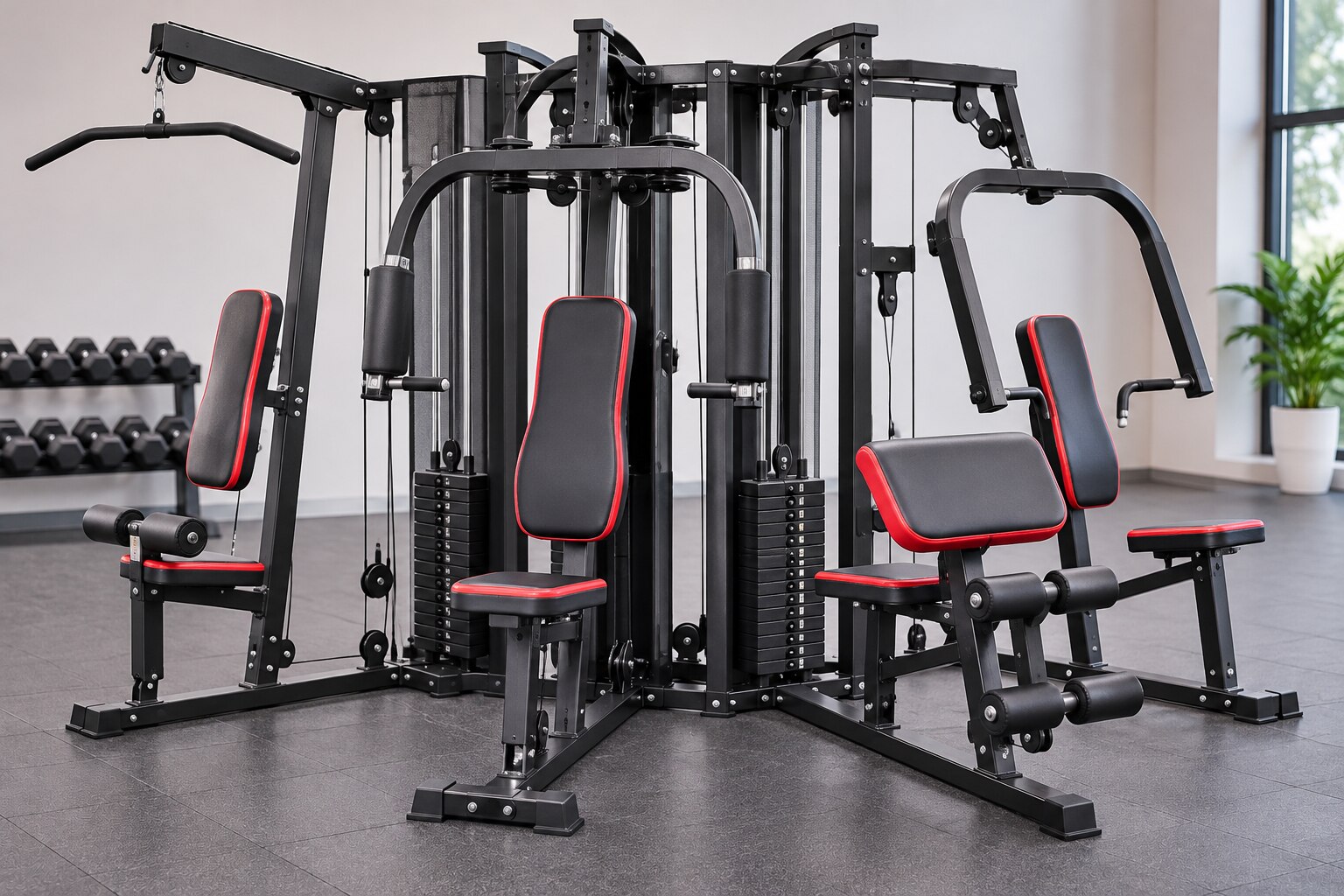
Multi Gym 5 Station The Multi Gym 5 Station is a versatile fitness equipment designed for strength training and overall fitness. View product → |
Define the Inspection, Repair and Handover Standard
A complete visit ends only when the affected station has been inspected, repaired, load-tested and formally released. A proper five station gym equipment repair checks the entire cable route, including pulley grooves, bearings, spacers, guards, cable ratio, end fittings, weight-stack connection and alignment—not only the failed part.
- Keep the station isolated, unload the weight stack, remove the selector pin and attach an out-of-order notice. Use a barrier, locked handle or controlled access point so members cannot test the fault; tell floor staff which exercises are prohibited and where to redirect users.
- Compare each replacement part with the make, model, serial number, station layout and cable-routing diagram. Confirm dimensions and the manufacturer’s part number where available, then inspect guide rods, selector mechanisms, linkages, upholstery, frame joints, fasteners and protective covers.
- After repair, test the full range without a user, then with progressive load. Check smooth cable travel, pulley noise, stack movement, selector-pin engagement, end stops, loose pivots and frame stability. A repaired cable fails quickly if misalignment or a seized bearing remains.
- Demand a signed record stating the defect, affected station, parts replaced, cable-routing verification, fasteners checked, tests performed, load used, technician’s name and the date returned to service. Record excluded parts and follow-up work separately.
- Remove the quarantine notice only after the responsible manager accepts the record and watches the final test. Archive photographs of the repaired area and keep the station unavailable if any movement, noise or fastener remains abnormal.
Build a Maintenance Plan for Nagpur Conditions and High Use
High-use facilities need a written schedule tied to member traffic, dust exposure, humidity and the manufacturer’s service interval. A five-station unit serving back-to-back sessions deserves more frequent checks than one used twice a week.
- Daily: inspect cables for broken strands, pulleys for noise, upholstery for tears, guards for gaps, selector pins for full engagement and frames for movement. Wipe sweat and dust with a damp cloth, then dry metal surfaces.
- Weekly: check accessible fasteners, cable slack, pulley alignment, guide-rod cleanliness, linkage play and missing covers. Keep weight stacks unloaded while checking movement.
- Monthly: document cable routing, pulley bearings, guide rods, structural joints, weight-stack alignment and corrosion. Check that cleaning products have not softened vinyl or stripped protective finishes.
- At each professional visit: test every station under controlled load, record defects and parts replaced, and verify cable routing, fasteners, guards and the return-to-service date.
Nagpur’s monsoon moisture demands ventilation, prompt drying and rust inspection around welds, cable ends and weight-stack hardware. Store chemicals away from the machine; avoid bleach, abrasive powder and solvent on painted steel or upholstery. Train members not to drop stacks, swing handles or force a stuck pin.
A multi gym maintenance service in Nagpur should separate preventive work from breakdown charges. Require a scope for adjustments and inspection, with cables, bearings, upholstery, selector pins, plates and structural repairs listed as included or excluded parts.
Keep an alternative station or free-weight exercise available whenever one position is quarantined. Never return it until the defect, repair and load test are recorded.
Frequently asked questions
What should you do before diagnosing a faulty five-station gym machine?
Stop using the affected station, remove the selector pin, unload the stack without forcing parts, switch off connected power, display an OUT OF ORDER notice, and block access.
How do you decide between repairing and replacing a multi-gym station?
Prioritise faults that affect cables, pulleys, locking parts, frames or user restraint. Compare the repair cost and remaining service life with the age, condition and spare-parts availability of the machine.
What should a Nagpur multi-gym repair quotation include?
Ask for separate lines covering inspection, labour, replacement parts, transport, taxes, warranty period, exclusions and the expected completion date. Request the technician’s fault findings and part specifications.
What should you check when a five-station gym repair is complete?
Confirm that fasteners are tight, cables track correctly, pulleys rotate smoothly, selector pins lock, upholstery is secure and every station passes a controlled unloaded and loaded test before reopening.
How can a fitness facility maintain a multi-gym in Nagpur?
Set inspection intervals based on member usage, clean dust from tracks and pulleys, check cable wear and fasteners, protect upholstery from sweat, and increase checks during humid monsoon conditions.
Keywords