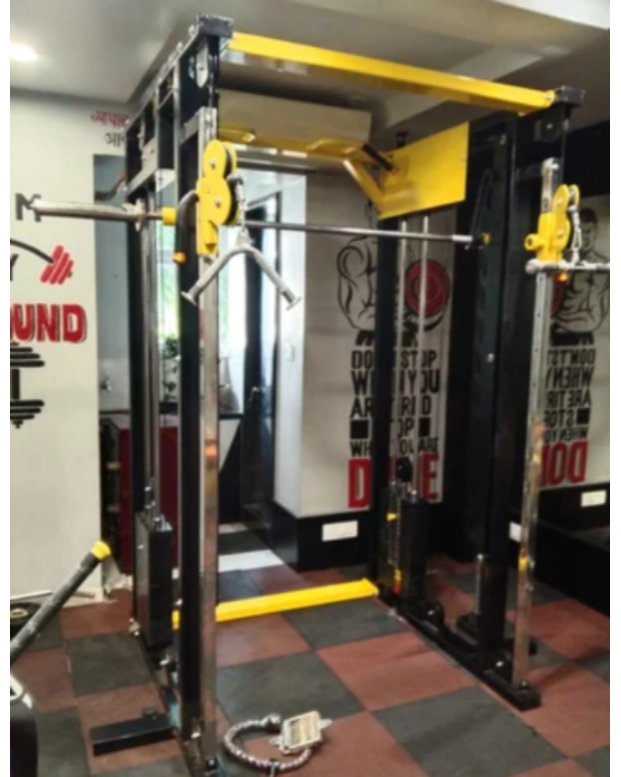
A Smith Machine With Power Rack combines two popular strength-training formats into one substantial equipment station. For gym owners, this can provide valuable training versatility, but the machine also requires careful evaluation because it occupies significant space and may become a central part of the strength floor.
Commercial buyers in Nagpur should therefore assess the equipment beyond its appearance and feature count.
Confirm What the Configuration Includes
Combination machines vary considerably.
Before comparing prices, establish exactly what is included in the proposed model. Depending on the design, features may include a guided Smith bar, free-weight rack positions, safety supports, pull-up grips, plate storage, or other components.
Buyers should compare equivalent configurations rather than assuming every combination rack offers identical functionality.
Inspect the Smith Movement
The guided bar system is one of the machine's most important components.
Movement should feel consistent through the available range. Examine guide components, bar travel, locking positions, and the mechanism used to secure the bar.
Users need to understand how to engage and release the system easily.
A commercial gym should also establish clear equipment-use guidance, particularly for members unfamiliar with Smith machines.
Examine the Power Rack Area
The free-weight rack section needs adequate internal working space.
Consider rack width, height, bar position, safety supports, and available adjustment points.
If users will perform squats, presses, or other barbell exercises, the configuration should provide sufficient room for intended movements.
Ceiling height also matters, especially when the structure includes pull-up handles or an elevated cross-member.
Check Floor Space Carefully
Combination equipment can save space compared with installing several separate stations, but it is still a large structure.
Measure:
- Overall machine dimensions
- Barbell clearance
- Plate-loading space
- Bench positioning area
- User access routes
- Storage requirements
- Distance from nearby equipment
Nagpur gyms operating in commercial units with pillars, low ceilings, or irregular floor plans should verify dimensions before placing an order.
Evaluate Frame and Safety Components
A rack may experience repeated loading from different directions.
Inspect steel construction, welded joints, adjustment holes, support components, bar catches, safety mechanisms, and the base.
Commercial equipment should be evaluated according to its specified usage and rated capacities.
Gym operators should also create inspection routines so frequently adjusted components are checked regularly.
Think About Compatible Accessories
A combination rack becomes more useful when it integrates effectively with the rest of the gym.
Check whether existing benches, bars, plates, and intended accessories can be used comfortably within the station.
Operators should avoid purchasing numerous attachments simply because they are available. Prioritize accessories that fit actual member training patterns.
Assess Manufacturer Readiness
For BOFU buyers already comparing suppliers, useful questions include how the equipment is fabricated, what specifications are available, what installation requirements apply, and how maintenance or replacement components are handled.
Singh Engineering Works is one manufacturing option for commercial gym equipment buyers in Nagpur looking to evaluate locally relevant machinery for new facilities or expansion projects.
A Smith Machine With Power Rack can become a high-use training station when its configuration matches the gym's audience. It may suit bodybuilding gyms, general fitness centres, institutional facilities, and strength-oriented clubs where members need both guided and free-weight exercise options.
The buying decision should ultimately be based on usable training space, construction, movement quality, compatibility, maintenance access, and expected member demand not simply the number of features attached to the frame.
Keywords