Choosing an Adjustable Bench Press for a commercial gym is different from buying a bench for occasional home workouts. In a fitness centre, equipment may be used repeatedly throughout the day by people of different heights, body weights, training styles, and experience levels. The bench therefore needs to deliver stability, practical adjustability, durability, and ease of use.
For gym owners and fitness equipment dealers in Nagpur, Maharashtra, understanding these factors before purchasing can help create a more functional strength-training area and reduce avoidable equipment issues later.
Why Adjustability Matters in a Commercial Gym
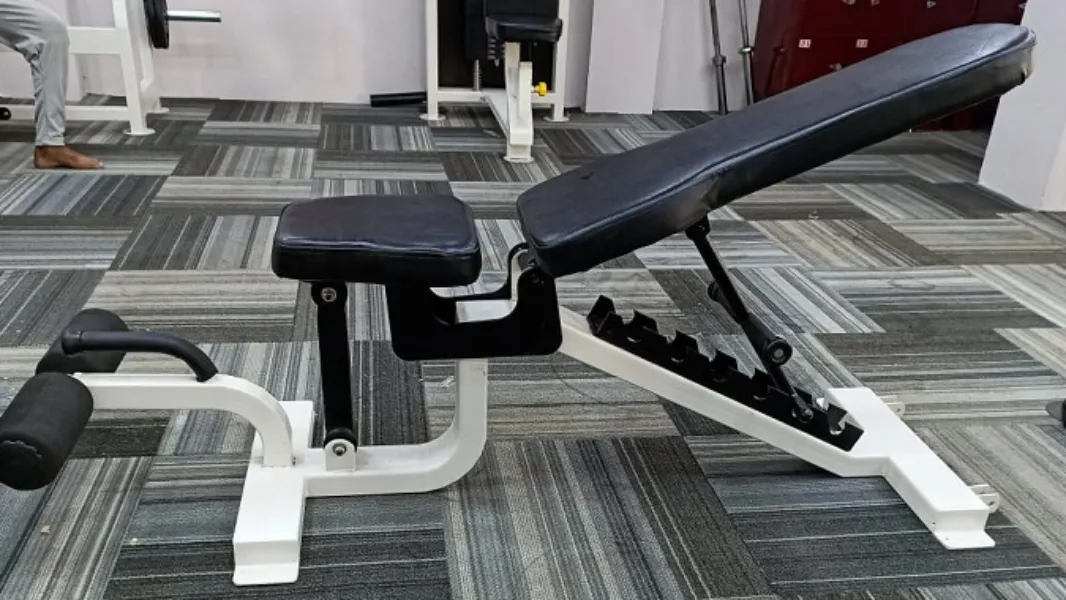
An adjustable bench gives members more exercise possibilities without requiring a separate bench for every movement. Depending on the design, users may change the backrest angle for flat, incline, or other pressing positions.
A well-designed bench can support exercises such as:
- Dumbbell bench press
- Incline dumbbell press
- Shoulder press
- Dumbbell fly variations
- Seated curls
- Triceps exercises
- General free-weight training
This versatility becomes especially valuable where floor space needs to be used efficiently.
However, having several adjustment positions is useful only when the mechanism is simple and secure. Complicated adjustment systems can interrupt workouts and become inconvenient in a busy facility.
Look Closely at Frame Construction
Commercial gym equipment experiences significantly more repeated loading than equipment intended for light personal use. Frame design should therefore be one of the first areas buyers examine.
Check the quality of the steel structure, joints, welding, support points, and overall balance of the bench. A strong frame should feel stable when a user gets into position, performs repetitions, or handles heavier dumbbells.
Unnecessary movement can affect user confidence and may also accelerate wear over time.
The base should provide sufficient support without creating awkward obstructions around the user's feet or the surrounding workout area.
Padding Should Balance Comfort and Support
Very soft cushioning can initially feel comfortable but may not provide adequate support during pressing exercises. Excessively hard padding can also make longer sessions uncomfortable.
Commercial benches generally benefit from firm, supportive cushioning that retains its shape under repeated use.
Upholstery deserves equal attention. Gym operators should consider whether the surface can withstand regular cleaning, sweat exposure, friction, and daily contact without quickly cracking or peeling.
Check the Adjustment Mechanism
Before purchasing, evaluate how the backrest and seat positions are changed.
A practical mechanism should:
- Be easy for members to understand.
- Lock securely into the selected position.
- Avoid excessive looseness between components.
- Allow quick changes between exercises.
- Remain accessible without awkward bending or handling.
In a commercial environment, simple engineering often delivers a better user experience than unnecessarily complicated mechanisms.
Consider Space Before Finalizing the Bench
Gym owners sometimes evaluate a bench individually without considering how it will interact with other equipment.
Measure the available training zone and account for space around dumbbell racks, plate-loaded machines, power racks, cable equipment, and walking paths.
An adjustable bench should be easy to reposition when required without disrupting nearby workout stations.
For fitness centres in Nagpur serving many members during peak hours, efficient equipment placement can make a noticeable difference to overall floor usability.
Think About Maintenance From Day One
Commercial buyers should ask how commonly used components can be inspected, tightened, repaired, or replaced.
Bolts, adjustment points, upholstery, end caps, and moving mechanisms naturally require periodic attention. Equipment that is straightforward to maintain can reduce operational inconvenience over its working life.
Manufacturers such as Singh Engineering Works can be evaluated not simply on how a bench looks when new, but on construction quality, practical design, serviceability, and suitability for commercial fitness environments.
The right Adjustable Bench Press should ultimately fit the gym's training model. A facility focused on serious strength training may prioritize robust construction and stability, while a general fitness centre may place greater emphasis on versatility and easy adjustments.
Evaluating equipment according to actual daily usage is far more useful than selecting a bench only by appearance or the number of advertised features.
Keywords