A leg press earns its footprint only when it solves a measurable capacity, programming or accessibility problem that existing strength equipment does not. By comparing member demand, usable sessions, machine type, floor requirements, lifecycle cost and supplier support, you can decide whether to buy one—and which specification makes financial sense.
Key takeaways
- Measure peak-hour demand before giving a leg press floor space.
- Choose the design that matches supervision, maintenance and member throughput.
- Include installation, repairs and downtime in your break-even calculation.
- Confirm room clearance, load capacity, safety features and final acceptance checks.
When does a leg press earn its space in a health club?
A leg press earns its space when documented peak-hour demand and member needs reveal a lower-body capacity gap—not because the movement is familiar.
1. Count every lower-body option: squat racks, Smith machines, hack squats, belt squats, leg extensions, leg curls and functional trainers. During the busiest 60 to 90 minutes, record users and queue times for at least one week.
2. Divide peak-hour users by available lower-body stations. Regular waits for bilateral loading, beginners needing a stable alternative to barbell squats, or high-volume programs keeping stations occupied support a leg press machine for health club use. If waits are rare, another machine duplicates an underused pattern.
3. Value the footprint, not just the exercise. A station that clears queues, supports circuits or serves members who cannot comfortably use a rack earns more than one that adds no usable capacity. Check transfer access and adjustment reach for intended members; constrained movement is not automatically safer.
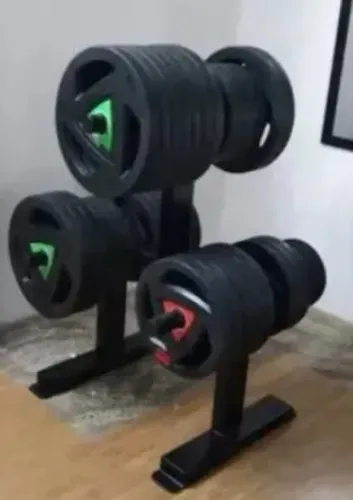
4. Map plate storage and re-racking space beside a plate-loaded unit. If demand is low, use the capital and floor area for storage, a second rack, or missing hamstring and quadriceps stations. Compare expected sessions per hour with those alternatives before approving this health club strength equipment purchase.
Which leg press design fits your operating model?
Choose the mechanism by throughput, coaching needs, available space and loading habits, not by maximum resistance alone. A leg press machine for gym use earns its footprint when members need stable, repeatable bilateral loading and staff cannot coach every squat.
Time a complete session, including adjustment, loading, cleaning and unloading; usable sessions per hour reveal more than a brochure.
| Option | Strength | Operating cost or constraint |
|---|---|---|
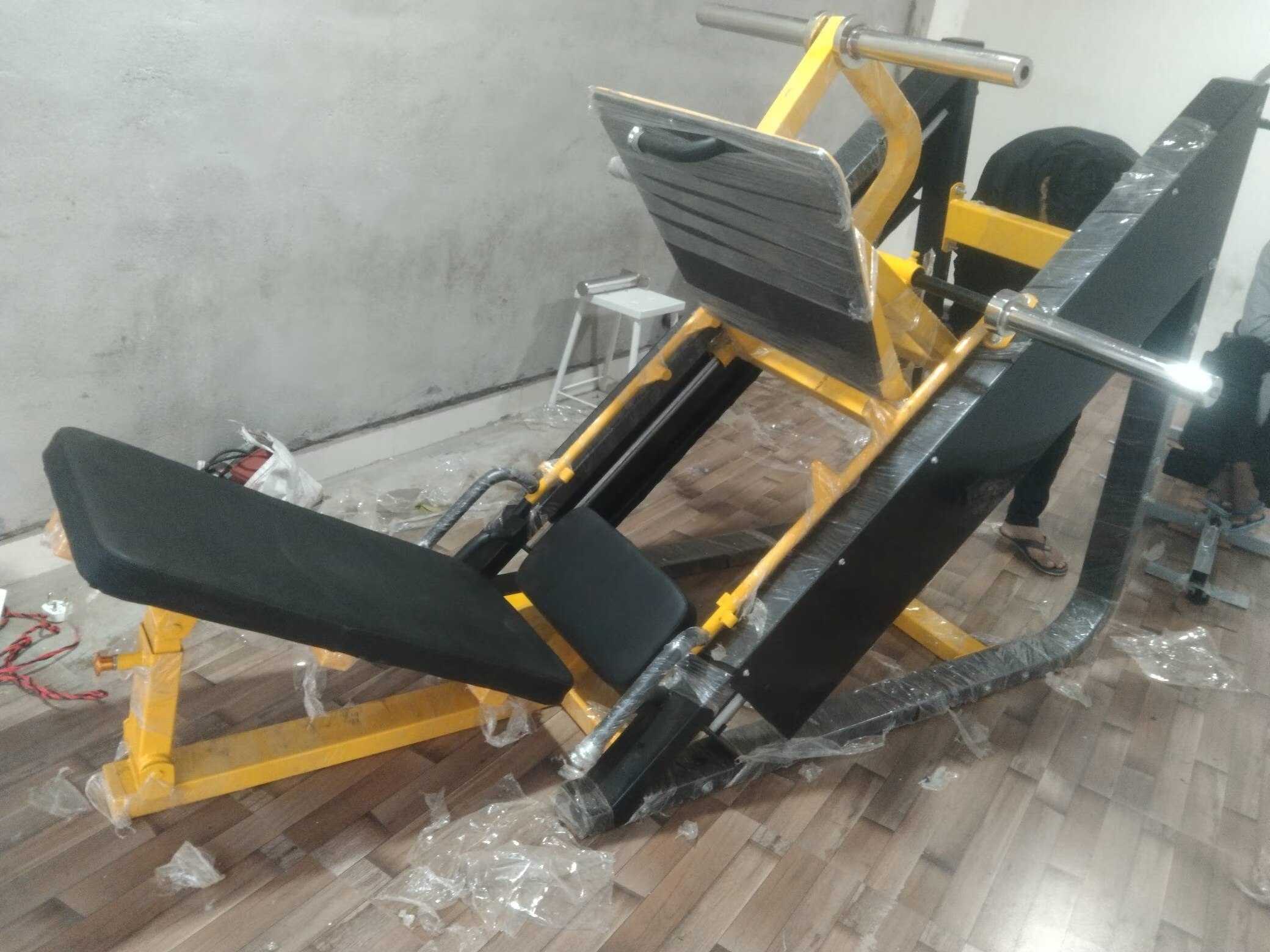
| 45-degree sled | Familiar bilateral movement and visible plate loading | Needs long travel space, plate-loading clearance, storage and more manual handling |
| Horizontal leg press | Easier access and simpler placement in a compact room | Check transfer height, approach clearance and adjustment effort |
| Vertical leg press | Small footprint | Check ceiling height, transfer access and strict user positioning |
| Selectorized leg press | Faster turnover because members move a pin | Inspect and replace cables, pulleys, guide rods and weight-stack parts |
| Smith machine or squat rack | Supports squats, presses and broader programming | Requires coaching, setup time and member confidence |
| Hack squat | Provides a fixed squat pattern | Offers less exercise variety than a rack |
| Belt squat | Reduces shoulder and spinal loading | Needs clear belt access and a suitable loading arrangement |
| Leg extension or curl | Targets quadriceps or hamstrings directly | Does not replace bilateral compound loading |
A commercial leg press machine should also match your loading culture. Plate-loaded units offer flexible progression but invite abandoned plates and longer changeovers; selectorized units improve flow but add service points. Include cleaning, re-racking and inspection in the timed trial, then choose the design that produces the most usable sessions per hour.
How can you calculate whether the purchase will break even?
Use a lifecycle cost model, not the catalogue price, to decide whether a commercial leg press machine will break even.
1. Add the delivered and installed purchase cost: machine price, freight, stairs or lifting, assembly, floor protection, anchoring, commissioning, GST, staff training and required structural work.
2. Add ownership costs across the usable service life: preventive maintenance, consumables, replacement upholstery, bearings, cables, pulleys, safety components and the cost of downtime while the machine is unavailable.
3. Estimate completed sessions, not theoretical capacity. If the club expects 18 sessions per day across six operating days each week, calculate 18 × 312 = 5,616 sessions per year before deducting downtime. Run low-use, expected-use and high-use cases.
4. Divide total lifecycle cost by expected completed sessions. The result is your cost per session. Compare it with the value assigned to each session through membership-revenue allocation, personal-training utilization or premium programming revenue.
5. Keep retention value separate from cash revenue. A documented retention assumption can support the decision, but do not present avoided cancellations as collected session income.
6. Request three separate load figures: maximum user mass, maximum resistance load and maximum combined moving mass. On a 45-degree sled, 100 kilograms of plates creates about 70.7 kilogram-force along the carriage before friction. Angle, linkage, counterbalance and bearings change the result, so advertised capacity is not comparable without the test definition.
This model shows whether the machine earns its footprint within your health club strength equipment budget.
What must the room and machine specification support?
The room and machine specification must support the complete operating and service envelope, not just the machine’s static length and width. Mark the carriage’s full travel, operator access path, plate-loading zone, clear space behind and beside the frame, and an unobstructed delivery and maintenance route.
1. Check ceiling height for vertical models. Verify floor loading for heavy plate-loaded units, including loading, unloading and hard carriage stops; check tile or rubber-floor compression and anchoring requirements. Retain the installation drawing and obtain structural approval before placing equipment on a mezzanine or suspended slab.
2. Inspect frame steel and welds, carriage rails or linear bearings, pivot points, footplate size, back-pad adjustment, safety-stop engagement, adjustment pins, upholstery seams and plate-storage horns.
Require a defined bottom-range stop: “deep range of motion” is not automatically better because stance and depth change knee and hip moments, while pelvic roll and lost lumbar contact create poor positions.
3. Check transfer height, approach clearance, adjustment force and grip reach for the members the health club intends to serve. An accessible route and usable clear floor space matter more than a nominal accessibility claim.
4. Request the exact ISO 20957-1 and ISO 20957-2 test basis, or ASTM F2276 reference, for the commercial leg press machine and its configuration. Treat “commercial grade” alone as insufficient evidence.
For health club strength equipment, record carriage wheels or bearings, cables, pulleys, safety-stop surfaces, upholstery and footplate coatings as wear items. Require inspection intervals, lubrication instructions, spare-part lead times and a written service response time before approval.
How should you compare suppliers, service and final acceptance?
Compare the installed, supported cost of each supplier, not the ex-works price. For a leg press machine for health club use, request one like-for-like quotation covering:
- Freight, stairs or lifting, floor protection, assembly, anchoring, commissioning, operator instruction, GST and preventive-maintenance visits.
- Lead times and availability for upholstery, bearings, cables, pulleys, adjustment pins and safety components.
- A written service response time and lubrication or inspection schedule. Warranty duration does not tell you how quickly a failed carriage bearing will be replaced.
| Compare | Require in writing | Reject or investigate |
|---|---|---|
| Delivery | Coverage across your operating area and a firm lead time | “Delivery available” without access or lifting details |
| Service | Response time, inspection intervals and named replacement-part lead times | Warranty-only support |
| Documentation | Model number, configuration, compliance documents and installation instructions | Generic brochure or unverified ISO 20957-1, ISO 20957-2 or ASTM F2276 claims |
A leg press machine supplier in Nagpur should be judged on delivery and installation coverage across your club’s operating area, not location alone. Include Singh Engineering Works in the same comparison when a Nagpur or central and western India facility needs manufacturing, installation or repair support.
At handover, run a representative loaded test through the approved range. Confirm smooth, equal carriage movement, no abnormal noise or play, positive safety-stop engagement, secure adjustment pins, stable upholstery, correct alignment and secure plate storage. Record the test result. Approve the purchase only when demand, cost per session, clearance and credible service support align.
Related product
 | Leg Press Machine The leg press machine is a popular and versatile piece of gym equipment designed to strengthen the lower body, particularly the quadriceps,... View product → |
Frequently asked questions
When does a leg press earn its space in a health club?
A leg press earns its space when peak-hour demand and member requirements show a lower-body training capacity gap.
Which leg press design fits a health club operating model?
Compare selectorized, plate-loaded, 45-degree and horizontal designs against supervision, user throughput, loading time and maintenance needs.
How can you calculate whether a leg press will break even?
Compare the installed purchase cost and ongoing expenses with the revenue or retained membership value linked to added lower-body training capacity.
What must the room and machine specification support?
Check floor area, access routes, ceiling height, user clearance, maximum load, adjustment range, safety stops and flooring requirements.
How should you compare leg press suppliers and final acceptance?
Compare written specifications, warranty response, spare-parts access, repair coverage, installation quality and performance against the agreed acceptance checklist.
Keywords