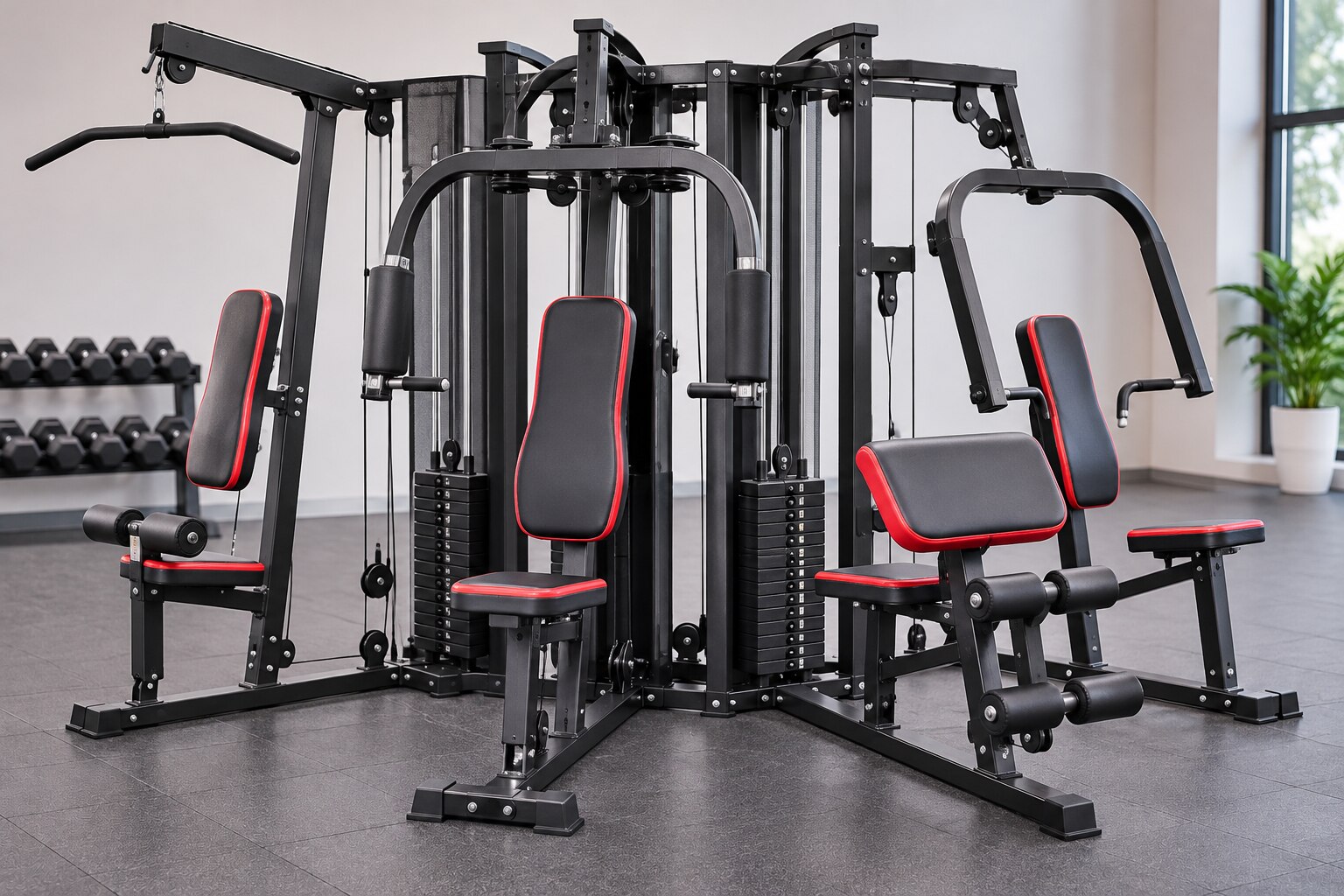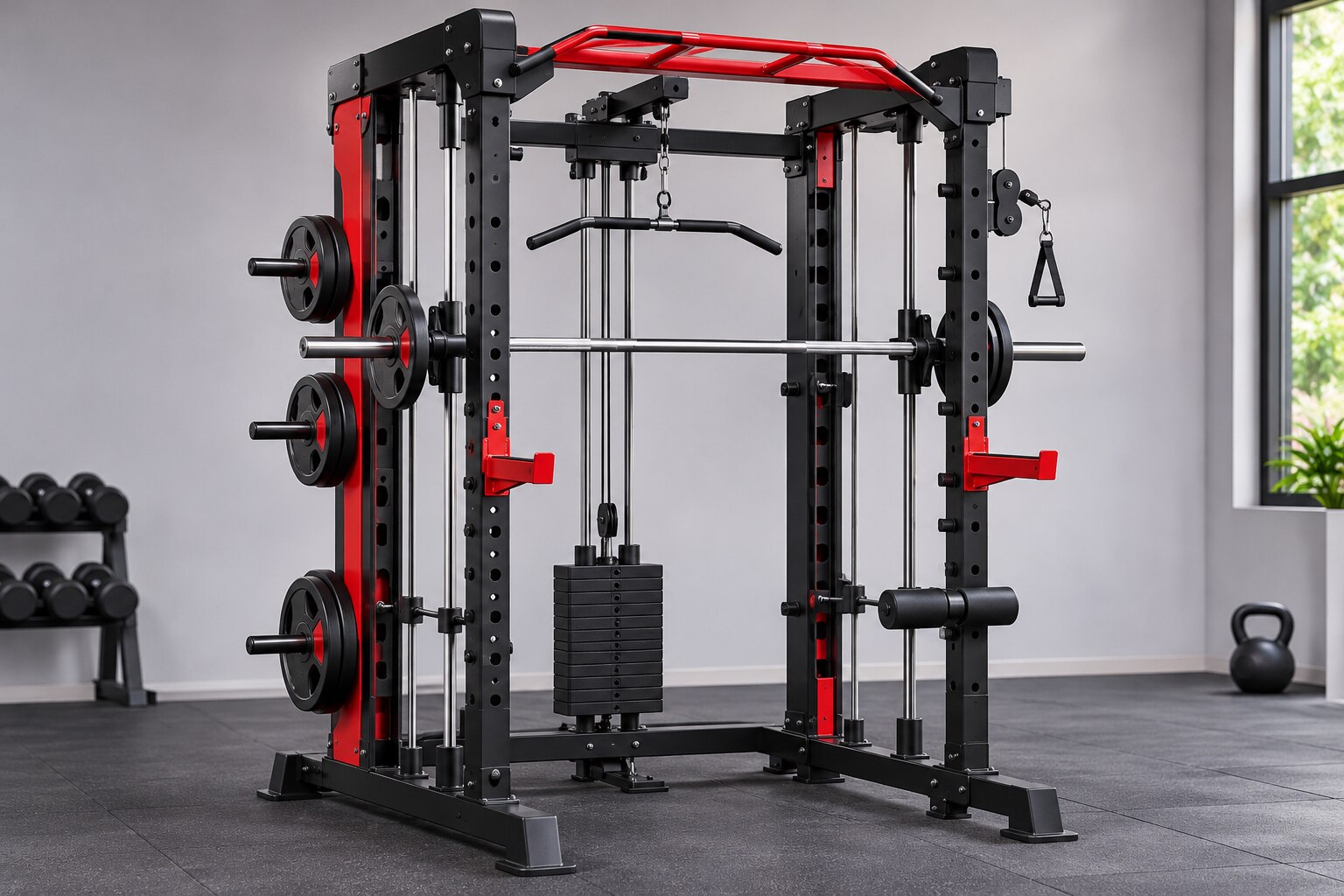
A “dual station” is not a complete specification: it can mean two named exercise stations, two cable columns or a shared frame, with different dimensions, resistance ratios and access needs. By the end, you will know what to request, how to compare the installed cost, how to prepare the site and what to test before signing acceptance.
Key takeaways
- Name both stations and confirm whether users can operate them simultaneously.
- Put dimensions, attachments, warranty, delivery and installation in the purchase order.
- Measure doorways, corridors, ceiling height and the final installation area.
- Record serial numbers and test every station before signing handover.
What exactly are you ordering, and what information belongs in the enquiry?
A “dual station” label is not a specification. Name both stations—lat pulldown plus seated row, or functional trainer plus adjustable pulley—and ask whether users can operate them simultaneously before requesting a price for dual station gym equipment in Nagpur.
Include these details in the enquiry:
- Exact model, assembled dimensions, frame size, exercise range, adjustment points, cable or lever arrangement, shipping dimensions and gross weight.
- Facility location in Nagpur, available room length and width, clear ceiling height, expected user volume and target exercises.
- Preferred frame finish and upholstery, plus whether the machine will use a weight stack or weight plates.
- Usable weight-stack or plate capacity and pulley ratio. A 2:1 system gives roughly half the selected stack load with twice the cable travel; a 1:1 system gives roughly the selected load with shorter travel.
Before you buy dual station equipment, compare the operating requirement with the alternatives below.
| Option | Compare | Record before deciding |
|---|---|---|
| Dual station | Compact paired stations; simultaneous use depends on the model | Floor area, exercise pair, queues and access for servicing |
| Two single stations | More layout flexibility; separate users and maintenance points | Total footprint, simultaneous use and loose-plate storage |
| Multi Gym 5 Station | More exercise variety; shared frame can create queues | User volume, exercise demand and maintenance access |
| Functional trainer | Broad cable exercise range; requires reachable pulleys and clear cable paths | Cable travel, adjustment points and service clearance |
This comparison prevents a catalogue label from deciding a purchase your gym’s training pattern cannot support.
How do you turn the quotation into a clear purchase order?
Turn the quotation into a purchase order by converting every verbal promise into a measurable line. Use the dual station ordering process in Nagpur to record the exact model and named exercise stations, not merely “commercial gym quality.”
- Specify assembled dimensions, working footprint, shipping dimensions, gross weight, steel tube size, upholstery material and thickness, frame finish, cable diameter and end fittings, pulley and bearing parts, guide rods, guards, maximum user or load rating, weight-stack or plate capacity, and pulley ratio.
- State whether accessories, tools, fasteners, selector pins and safety guards are included.
| Cost line | Put this in the order | Why it matters |
|---|---|---|
| Equipment | Base machine price and taxes separately | Exposes the real equipment cost |
| Delivery | Freight to site, unloading, internal shifting, stair or lift carrying | “Free delivery” may stop at the vehicle |
| Installation | Assembly, anchoring, consumables, civil work, commissioning and packing removal | Prevents later site charges |
| After-sales | Replacement-part freight | Separates warranty service from transport costs |
Confirm payment stages, production lead time, expected dispatch date, warranty duration, warranty response time and parts availability. Name the installation room and delivery contact, then attach an acceptance procedure.
Require separate packing-list lines for the main frame, stacks or plates, cables, pulleys, guards, upholstery, fasteners and tools. State that missing or damaged parts must be recorded at delivery, replaced at the supplier’s cost, and not treated as accepted.
A low equipment price is not a low installed cost when freight, unloading or anchoring appears later as an extra charge.
How do you prove the machine can reach and fit the gym room?
Prove the machine can reach and fit the gym room before production or dispatch, not after the truck arrives. The dual station supply process should begin with a measured route and a marked training area, not only an assembled catalogue footprint.
- Measure every doorway, corridor turn, stair width and landing, lift door, lift cabin length and width, lift height limit, and the complete floor-to-floor route.
- Record the unloading area, vehicle-to-building path, and turning space needed to rotate knocked-down frame sections.
- Compare each measurement with the shipping dimensions and gross weight. Do not compare only the assembled dimensions.
- Mark seat adjustment, entry and exit, knee and leg movement, cable travel, lever swing, and clearance around moving parts. Reserve space for both stations when users train simultaneously.
| Check | Compare | What failure it prevents |
|---|---|---|
| Shipping size | Narrowest doorway, turn and lift opening | Frame sections becoming stuck |
| Gross weight | Lift limit, stair route and floor capacity | Unsafe carrying or lift refusal |
| Usable footprint | Marked movement and simultaneous-use area | Cable, lever or user collisions |
| Unloading route | Vehicle path and rotation space | Extra shifting or a failed delivery |
Check floor levelness, finished flooring and curing time before installation. Follow the manufacturer’s instructions on anchors: tall cable frames and equipment exposed to lateral pulling may need them. Confirm anchor positions, drilling depth, reinforcement conflicts and who repairs the floor.
Before delivery in Nagpur, clear the route, finish dusty or wet construction, provide lighting and required power, secure loose parts, and keep the installation area accessible during agreed working hours. Confirm whether unloading and internal shifting are included; “free delivery” does not automatically cover either.
What happens from dispatch through dual station installation and handover?
1. The dual station supply process starts with a dispatch confirmation and written packing list. Before unpacking, inspect the delivery and photograph crushed packaging, paint damage or visible frame distortion. Count the main frame, weight stack or plates, cables, pulleys, guards, upholstery, fasteners and tools.
2. Assembly joins the frame sections, installs guards and upholstery, levels the machine and tightens every structural fastener. Anchor it only where the manufacturer’s instructions and floor assessment require; record anchor positions and any drilling or floor-repair responsibility.
3. The dual station installation process includes routing each cable, checking pulley alignment, setting cable tension, and verifying selector-pin retention and safety-pin operation. Ask Singh Engineering Works to record the model and serial number, installation scope and unresolved defects on the handover note.
4. Test every exercise path unloaded and at working load. Check smooth travel, equal movement on both sides, frame rocking, unusual noise and clearance at each end of movement. Inspect welds, paint, upholstery seams, guards, cable terminations and pulley rotation before signing acceptance.
5. Keep the exploded parts diagram, cable and belt specifications, pulley and bearing details, lubrication guidance, adjustment procedure and wear-item list with the machine. Sign only after missing parts, cosmetic damage and operational defects are written down with an agreed remedy, responsible party and completion date.
Related product
 | We are engaged in manufacturing and supplying a wide range of Dual Station. View product → |
What should you check before accepting the installed equipment?
Accept the equipment only after a final inspection, not when assembly ends. The dual station installation process is complete when both stations are safe, tested, documented and formally accepted.
1. Inspect the frame before loading it. Look for incomplete welds, cracked or chipped paint, loose upholstery seams, missing guards, damaged cable terminations, loose fasteners and frame rocking.
2. Test every adjustment from its lowest to highest position. Operate both simultaneous-use paths when the model is designed for two users; confirm equal travel, correct resistance changes, smooth pulley rotation and the stated clearance around moving parts.
3. Listen for scraping, clicking or knocking. Watch each cable through its full travel and reject any setup where it rubs against a frame, guard or pulley, or where the selector pin does not stay fully retained.
4. Write the model and serial number, final configuration, anchor locations, installer’s name, installation date, warranty contact and every unresolved defect on the delivery or installation note. Record missing parts, cosmetic damage and operational faults before signing.
5. Keep the maintenance information with the machine. Inspect cables for fraying, crushed sections, kinks and damaged end fittings, along with pulley bearings, guide rods, selector pins and fastener tightness, based on usage and condition. Do not wait for a cable to break.
Ask how replacement cables, pulleys, bushings and upholstery are identified and shipped. Complete records make later gym equipment repair services faster because technicians can order the correct proprietary part instead of identifying an unknown component after failure.
Frequently asked questions
What information should you include when enquiring about a dual station?
Name both stations, state whether simultaneous use is required, and provide the available room dimensions, user capacity, preferred attachments and delivery location.
How do you turn a dual station quotation into a purchase order?
Match the purchase order to the quotation and specify the exact station combination, dimensions, finish, accessories, quantity, delivery terms, installation scope, warranty and payment milestones.
How can you prove a dual station will reach and fit the gym room?
Measure the machine footprint, doorway and corridor widths, turning points, stair or lift access, ceiling height and clearances around the equipment. Share the measurements and an access route with the supplier.
What happens during dual station delivery and installation?
The supplier coordinates dispatch, checks site access, unloads and positions the equipment, assembles and anchors it when required, adjusts cables and moving parts, and demonstrates safe operation.
What should you check before accepting an installed dual station?
Check the frame, upholstery, pulleys, cables, pins, grips, weight stacks and guards. Test both stations, confirm simultaneous use if ordered, and record serial numbers, defects and included documents before signing handover.
Keywords